Vevor Water Chiller for Cold Plunge 2026: Which Model & How to Set It Up

In this guide
Vevor has become the most recommended water chiller brand for cold plunge setups on a budget — and for good reason. Their aquarium-series chillers reach 39°F, run quietly, include a pump in the box, and cost a fraction of what dedicated cold plunge brands charge for equivalent cooling performance. This guide cuts straight to which Vevor model fits your setup, how to connect it, and what to expect in real-world daily use.
If you already know Vevor is the right brand and just want the model recommendation, jump to Which Vevor model to buy. If you want the full picture first, read on.
Why Vevor for cold plunge?
The cold plunge market has a pricing problem. Branded systems from Plunge, Ice Barrel, and similar companies typically run $3,000–$8,000 for what is mechanically a tub plus a refrigeration unit. The chiller inside those systems uses the same vapour-compression refrigeration technology as a standalone Vevor aquarium chiller. You are paying primarily for the integrated design and the brand.
Vevor's aquarium chiller lineup offers a direct alternative. Connect one to any insulated tub — a stock tank, a barrel plunge, a chest freezer conversion, or a purpose-built cold plunge vessel — and you get equivalent cooling performance for $283–$389. The trade-off is a slightly more involved setup process. The performance outcome is identical.
What Vevor gets right
- Minimum temperature of 39°F — covers every cold plunge protocol from beginner 58°F sessions down to advanced 40°F exposure
- Titanium evaporator — resists corrosion from minerals, bath salts, and chemical sanitisers
- Pump included — no separate pump purchase needed, matched to the chiller's flow requirements out of the box
- Quiet rotary compressor — 45–50 dB, acceptable for indoor use including bathrooms and bedrooms
- Digital thermostat — simple set-point control, holds temperature within ±2°F
- Continuous operation rated — designed to run 24/7, cycling on and off to maintain temperature rather than wearing out from constant full-load operation
What to be aware of
- Vevor labels these as aquarium chillers — the same units work perfectly for cold plunge and ice bath, the category name is just their retail positioning
- Performance degrades above 80°F ambient — if your setup is in a hot garage or outdoors in summer, size up one tier
- Warranty is 12 months through Vevor directly — shorter than some premium brands
Which Vevor model to buy
Vevor makes three aquarium-series models relevant to cold plunge. The choice comes down to your tub volume and where your setup is located:
| Model | Tub size | Best environment | Min temp | Price | Link |
|---|---|---|---|---|---|
| 52 Gal, 1/10 HP | Up to 52 gal | Indoor, ≤75°F ambient | 39°F | $283.90 | View → |
| 110 Gal, 1/3 HP | 52–110 gal | Indoor or warm room, best all-rounder | 39°F | $389.90 | View → |
| 500 Gal, 1-1/2 HP | 110–500 gal | Outdoor, hot garage, large tub | 39°F | $905.90 | View → |
The short answer for most people: if your tub is under 52 gallons and your space stays below 75°F, the 52-gallon model saves you $106 and performs equally well. If you have any doubt about ambient temperature or tub size, the 110-gallon model is the safer buy and the one we recommend most often. See our full sizing guide for a detailed breakdown.
Matching your Vevor to your tub type
Barrel plunge tub (40–60 gallons)
The most popular DIY cold plunge vessel. At 40–60 gallons the 52-gallon 1/10 HP Vevor is well matched in a cool indoor space. For outdoor barrel setups in warm climates, the 110-gallon model gives you the ambient headroom you need. Barrel tubs have relatively poor insulation compared to purpose-built vessels — this increases the chiller's workload, another reason to size up if in doubt.
Stock tank (80–150 gallons)
The Rubbermaid or Tarter stock tank is the most popular DIY cold plunge vessel overall — cheap, durable, and available in gallon sizes from 50 through 300 at farm supply stores. For 80–100 gallon tanks the 110-gallon Vevor is the correct match. Foam insulation panels around the outside of the tank dramatically improve chiller efficiency and reduce cool-down time.
Chest freezer conversion (60–100 gallons)
Chest freezer cold plunges are popular because the freezer provides excellent insulation. Most people disable the freezer's own compressor and use it purely as an insulated vessel, then connect a Vevor chiller. The 110-gallon model is the right fit for most chest freezer conversions. The tight insulation means this setup reaches target temperature faster than an uninsulated stock tank of the same volume.
Purpose-built cold plunge tub (50–80 gallons)
If you have a dedicated cold plunge vessel without a built-in chiller, or want to replace an underperforming built-in, the Vevor connects via standard barbed hose fittings. The 52-gallon unit covers tubs under 60 gallons, the 110-gallon covers up to 80 gallons comfortably.
Vevor cold plunge models reviewed
Vevor 52 Gallon, 1/10 HP — Best budget cold plunge chiller
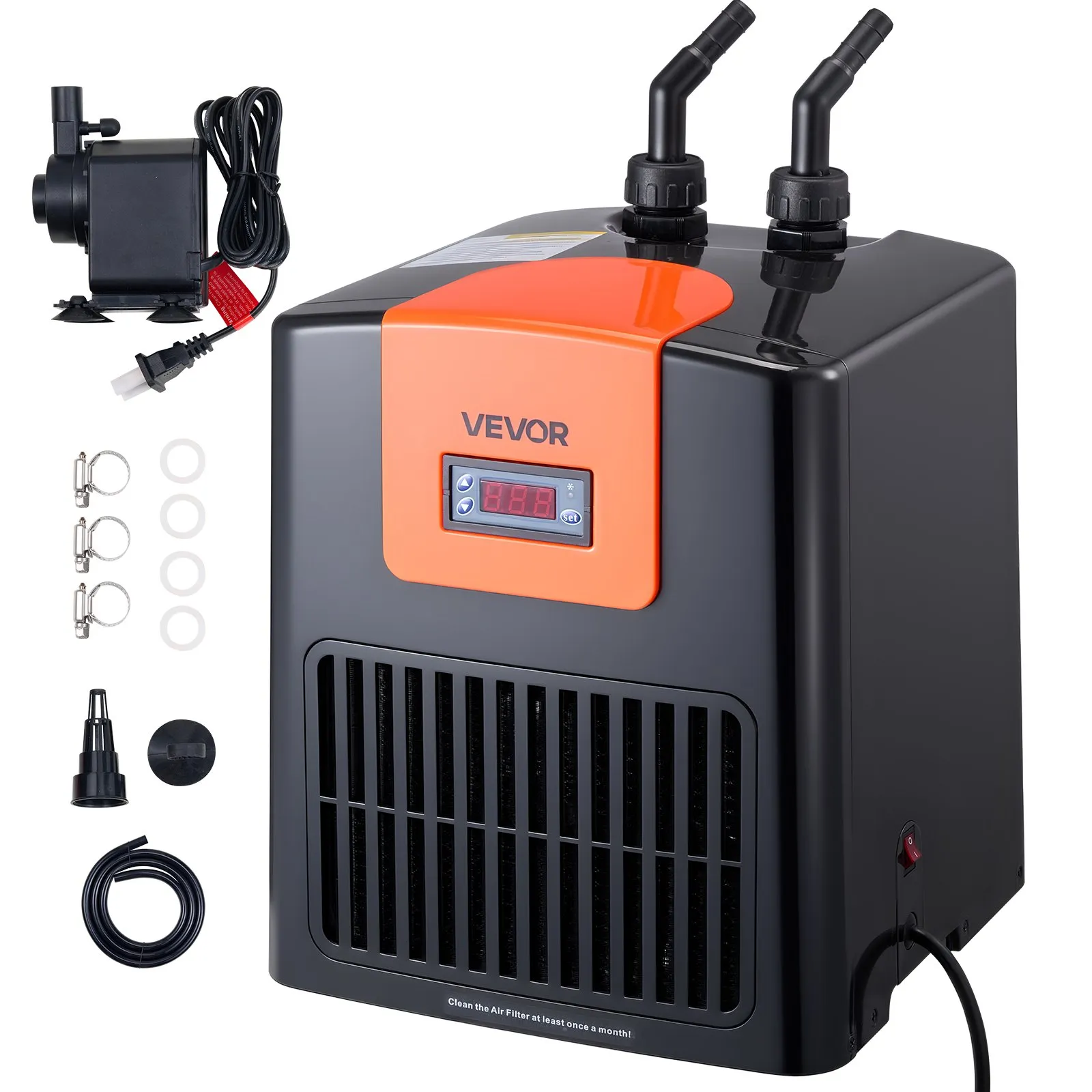
At $283.90 this is the entry point for real refrigeration-based cold plunge cooling. The compact black form factor fits easily next to a barrel or stock tank without taking over your space. It ships with everything you need — submersible pump, hose fittings, clamps — and initial setup takes around 20 minutes.
In real-world cold plunge use, this unit brings a 50-gallon tub from tap temperature (around 65°F) to 55°F in approximately 2–2.5 hours in a 70°F room. Temperature recovery between 10-minute sessions is around 20–30 minutes. For once-daily use with sessions under 15 minutes, this is more than adequate.
Where it shows its limits: in a warm room (above 75°F), extended cool-down and recovery times, and holding temperatures below 50°F becomes difficult. If you want to regularly target 45°F or below, step up to the 110-gallon model.
Best for: Budget buyers, tubs under 52 gallons, indoor climate-controlled spaces, once-daily sessions.
Vevor 110 Gallon, 1/3 HP — Best all-round cold plunge chiller
Full in-depth review: Vevor 110 Gallon CL-850 → — specs, real-world temps (48°F on 150-gal in 90°F Florida), R290 refrigerant, hose sizing, and installation guide.
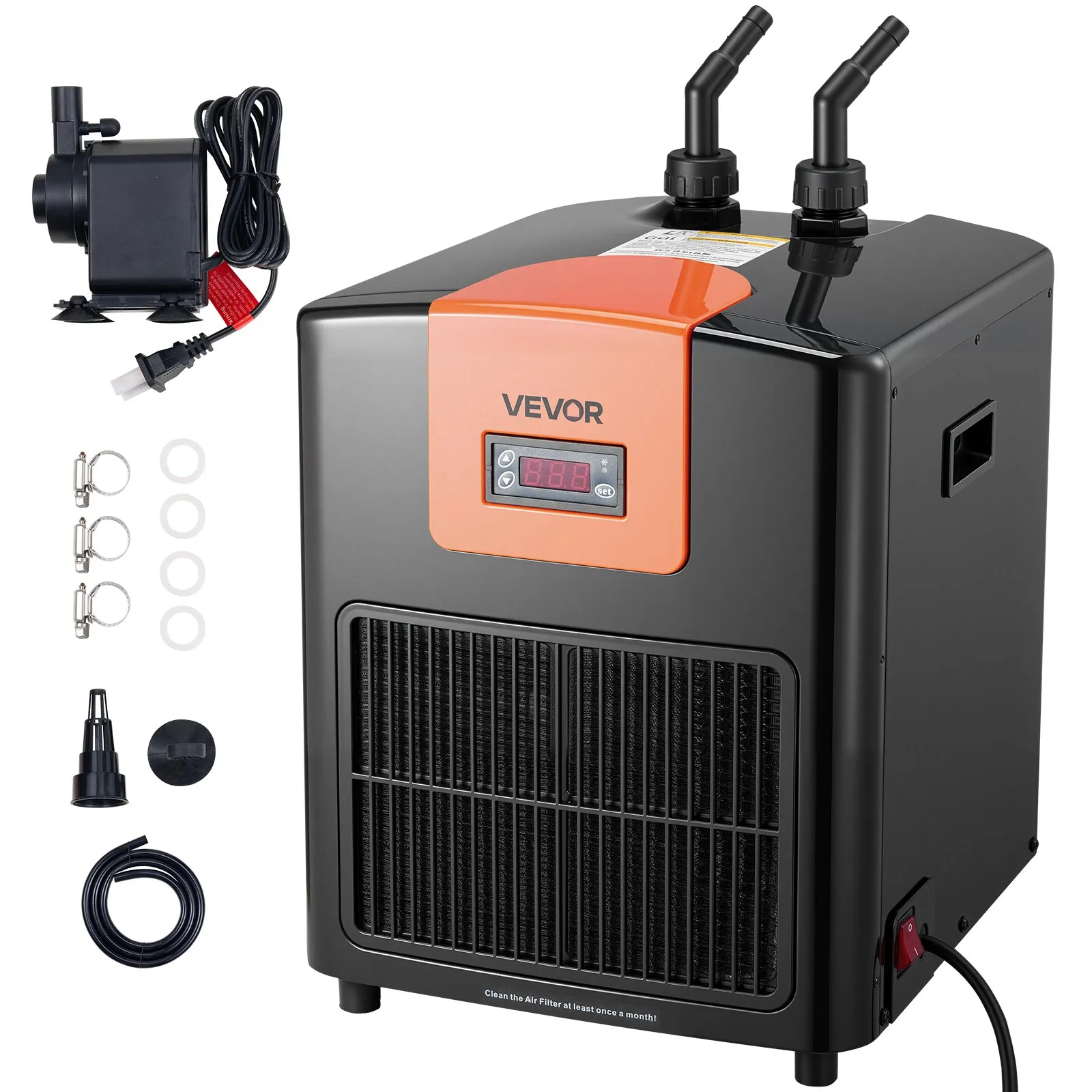
This is the model we recommend to most cold plunge users. At $389.90 it is $106 more than the 52-gallon unit and meaningfully better in three ways: faster cool-down, faster recovery between sessions, and reliable performance in warmer ambient conditions.
For daily cold plunge users — the audience most likely to be reading this guide — session recovery time matters. After a 10-minute plunge in a 70-gallon stock tank, the 110-gallon model returns to 55°F in around 15–20 minutes. That is fast enough for back-to-back household sessions without a long wait.
It also holds target temperature confidently through summer in a room up to 80°F, which covers most indoor US home environments year-round without any issue. If your space regularly exceeds 80°F, consider the 500-gallon model instead.
Best for: Daily users, multiple household users, tubs 52–110 gallons, warm climates, anyone who wants set-and-forget reliability.
Vevor 500 Gallon, 1-1/2 HP — Best for outdoor or large setups
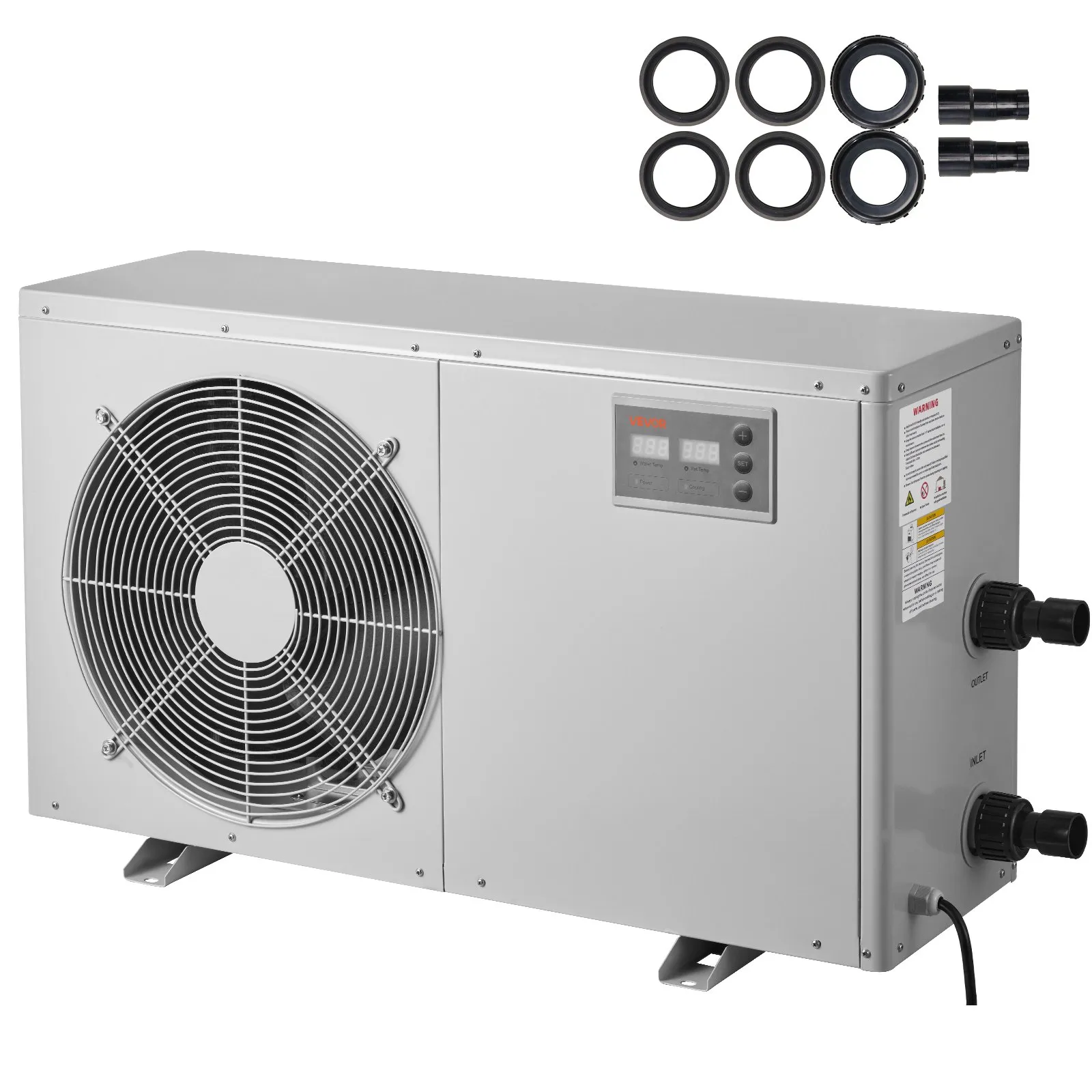
A full outdoor-style split chiller for large tubs, outdoor setups, or hot climates where the compact models run out of headroom. At $905.90 it is a significant step up in both price and capability — rated to 500 gallons with a large axial fan condenser designed for warm ambient conditions.
For most residential cold plunge users this is overkill. Where it makes sense: outdoor setups exposed to summer heat, large stock tanks over 120 gallons, commercial or gym cold plunge installations, and anyone who wants maximum temperature headroom on the hottest days of the year.
Best for: Outdoor setups, tubs over 120 gallons, hot climates, commercial use.
Step-by-step Vevor cold plunge setup
Setting up a Vevor chiller for cold plunge takes around 20–30 minutes. Here is the complete process:
What you need
- Vevor chiller (pump, hoses, and fittings included in the box)
- Your tub filled with cold tap water
- A power outlet within reach of the chiller's cord
- Optional: foam insulation panels for the outside of the tub
1. Position the chiller
Place the chiller on a flat surface within reach of your tub. Leave at least 12 inches of clearance on all sides for ventilation — the condenser fan exhausts warm air and needs space to do so. Do not put it inside a sealed cabinet. Position it at or below the water line of your tub where possible; gravity-assisted flow reduces strain on the pump.
2. Connect the hoses
The Vevor ships with two barbed hose fittings that screw into the inlet and outlet ports on top of the unit. For the 52-gallon and 110-gallon models there is no distinction between inlet and outlet — either port can be used for either direction. Cut the included tubing to the length you need and secure with the provided hose clamps. Make sure clamps are tightened firmly — loose connections are the leading cause of leaks.
3. Place the pump in the tub
The included submersible pump goes fully into the water in your tub. Connect one hose from the pump outlet to a chiller port, and the second hose from the other chiller port back into the tub. The pump pulls water from the tub through the chiller and returns it cooled.
4. Set the temperature
Press the SET button on the digital display and use the arrow keys to set your target temperature. For a first session, 55°F is a good starting point if you are new to cold plunge. The display shows current water temperature and your set point. The compressor starts approximately 3 minutes after you power on — this is normal, not a fault.
5. Initial cool-down
Start with the coldest tap water you can get. Fill the tub, turn on the chiller, and wait. Cool-down from tap temperature to 55°F in a 60–70 gallon tub takes 2–4 hours depending on your model and ambient conditions. Use a lid during cool-down if your tub has one — it reduces heat gain from the environment and speeds the process by 20–30%.
6. Leave it running
Once at temperature, leave the chiller running continuously. It cycles on and off to maintain the set point — this is normal and efficient operation. Continuous operation is gentler on the compressor than repeated full start-stop cycles.
Real-world cold plunge performance
Based on community reports and verified user reviews, here is what to expect from each Vevor model in typical cold plunge conditions:
| Model | Cool-down (60 gal, 70°F room) | Recovery after 10-min session | Holds 50°F at 80°F ambient? |
|---|---|---|---|
| 52 Gal, 1/10 HP | 2.5–3.5 hrs | 25–40 min | Marginal |
| 110 Gal, 1/3 HP | 1.5–2.5 hrs | 15–25 min | Yes |
| 500 Gal, 1-1/2 HP | <1.5 hrs | <15 min | Yes, comfortably |
See also: cold plunge temperature & time guide and sauna and cold plunge contrast therapy guide.
For water quality, filtration, and sanitation guidance: cold plunge water maintenance guide →
FAQs
Can a Vevor aquarium chiller really be used for cold plunge?
Yes — Vevor labels their chiller range as aquarium chillers for retail positioning but the units are used widely for cold plunge, ice bath, and hydroponic applications. The technology is identical. The aquarium-series units are the compact black models that work well for cold plunge tub volumes. See our full Vevor water chiller review for a complete model breakdown.
How cold can a Vevor chiller get?
All three models on this page are rated to a minimum of 39°F. In practice, in a 70°F room with an insulated tub, they reliably reach 40–42°F. Reaching 39°F requires a cool ambient environment and a well-insulated tub.
How much does it cost to run a Vevor chiller daily?
The 1/10 HP model draws approximately 100–150 watts when running. At average US electricity rates and assuming 30–50% duty cycle, expect $5–$10 per month for the 52-gallon unit. The 1/3 HP model draws slightly more — budget $8–$14 per month in most climates. Hot summers or warm rooms push toward the higher end.
Do I need any extra equipment beyond the Vevor chiller?
No — the pump, hoses, and fittings are included. You need a power outlet and a tub filled with water. Optionally, foam insulation panels around the tub exterior significantly improve efficiency and are worth the $20–$40 cost. A tub cover speeds cool-down and reduces evaporation.
How long does Vevor's warranty last for cold plunge use?
Vevor provides a 12-month manufacturer warranty on their water chiller range for purchases through their official website. Warranty support is handled through Vevor's support portal. Using the chiller for cold plunge rather than aquarium use does not void the warranty — the application is not restricted in their terms.
What temperature should I set for cold plunge?
Beginners typically start at 55–59°F and work down over weeks. The most commonly cited evidence-based range for benefits including muscle recovery and mood improvement is 50–59°F. For advanced protocols targeting metabolic adaptation, 45–50°F is common. All Vevor models reach 39°F, giving you the full range to work with as your tolerance builds. Our full cold plunge buyer guide covers protocols in more detail.
Vevor vs branded cold plunge systems — is Vevor actually worth it?
Mechanically yes. A Vevor 110-gallon chiller connected to an insulated 80-gallon stock tank delivers equivalent cooling performance to systems costing 5–10x more. What branded systems offer is an integrated design, a polished aesthetic, and the simplicity of a single purchase. If those things matter to you, they are worth the premium. If you are comfortable with a simple DIY connection, the Vevor route delivers the same physiological outcome for a fraction of the cost.