Best Water Chillers for Cold Plunge 2026: Top Picks from $283
In this guide
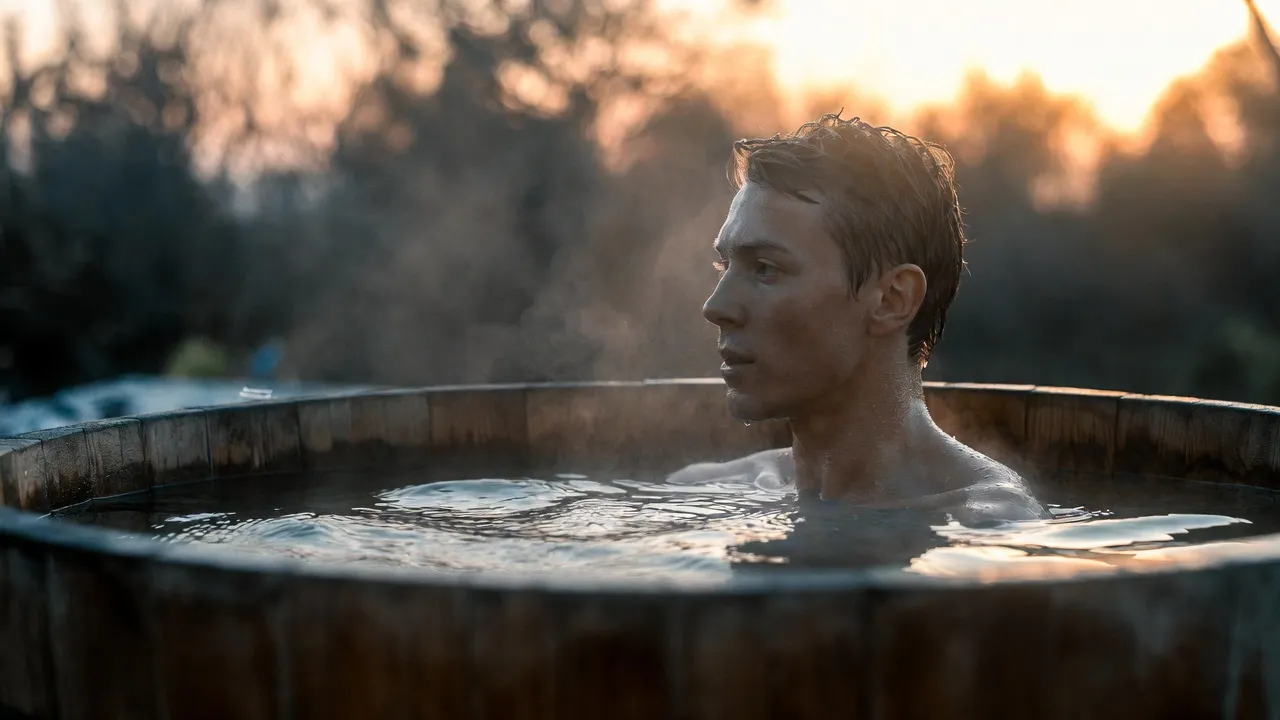
Cold plunge therapy has moved from elite athletic recovery into mainstream wellness practice over the past few years. The problem is that the commercial cold plunge market has responded by charging $3,000–$10,000 for what is, mechanically speaking, a tub and a refrigeration unit. A standalone water chiller connected to your own tub delivers the same physiological effect for a fraction of the price.
This guide focuses specifically on cold plunge use — which has some differences from a standard ice bath setup worth understanding before you buy. We cover the Vevor models that deliver the best performance for cold plunge protocols, how to match them to different tub types, and what temperature ranges the research actually supports.
Quick picks
| Model | HP | Capacity | Min Temp | Price | Link |
|---|---|---|---|---|---|
| Vevor 52 Gal, 1/10 HP | 1/10 HP | 52 gal | 39°F | $283.90 | View → |
| Vevor 110 Gal, 1/3 HP | 1/3 HP | 110 gal | 39°F | $389.90 | View → |
| Vevor 500 Gal, 1-1/2 HP | 1-1/2 HP | 500 gal | 39°F | $905.90 | View → |
Cold plunge vs ice bath — does the chiller choice differ?
For the most part, no — both applications are trying to achieve the same thing: getting and maintaining water at 50–59°F for repeated immersion sessions. The refrigeration technology is identical and the same chiller models work for both.
Where cold plunge does differ slightly is in usage pattern. Dedicated cold plunge practitioners often plunge daily or even twice daily, which puts more demand on temperature recovery — the time it takes to return to target temperature after a session. Ice bath users tend to be less frequent, often 3–4 times per week around training sessions.
This means if you're using your setup as a daily cold plunge, recovery time matters more than initial cool-down time. The 110-gallon model's extra capacity headroom means it recovers faster between sessions than the 52-gallon unit — worth the extra $106 if daily use is your plan.
What matters most for cold plunge use
Temperature consistency
For cold plunge protocols that target specific temperatures — 50°F for a Huberman-style 11 minutes per week protocol, or 55°F for beginners — thermostat accuracy matters. Vevor's digital thermostat holds temperature within ±1–2°F in stable conditions, which is more than adequate for any current evidence-based protocol. The ±1°F variance won't affect physiological outcomes.
Recovery time between sessions
After a 5–10 minute plunge in a 60-gallon tub, body heat transferred to the water raises the temperature by approximately 2–4°F. The time to return to target depends on the chiller's HP relative to water volume. The 52-gallon unit recovers in about 20–30 minutes on a 50-gallon tub. The 110-gallon unit recovers faster and handles larger volumes. For households with multiple users plunging in sequence, this matters significantly.
Continuous operation reliability
A cold plunge chiller that's always on runs more cycles per day than a unit used occasionally. Check that any unit you're considering is rated for continuous operation — Vevor's range is, which is part of why they show up consistently in community recommendations.
Noise in residential settings
Cold plunge tubs are increasingly installed in bathrooms, bedrooms, and converted spaces where noise is a real consideration. The compact Vevor models run at 45–50 dB — quiet enough that most users report being unbothered with a door between them and the unit. The 500-gallon outdoor model is louder and better suited to a garage or outdoor enclosure.
Matching your chiller to your tub type
Cold plunge enthusiasts use a wide variety of vessels. Here's how to match chiller capacity to the most common options:
Barrel plunge tub (40–60 gallons)
Barrel-style plunge tubs — both commercial versions and DIY whiskey barrel conversions — typically hold 40–60 gallons. The Vevor 52-gallon 1/10 HP is well-matched to this volume in a moderate climate. Step up to the 110-gallon model if you're in a warm region or planning daily use with multiple users.
Stock tank (100–150 gallons)
The Rubbermaid stock tank has become one of the most popular DIY cold plunge vessels — affordable, durable, and available in sizes from 50 to 300 gallons at farm supply stores. For a 100-gallon stock tank, the 110-gallon Vevor model is the correct match. For 150-gallon tanks in warm environments, consider the 500-gallon model for adequate headroom.
Chest freezer conversion (60–100 gallons)
Chest freezer cold plunges are popular because the freezer provides natural insulation. The trade-off is that the compressor inside the freezer is fighting against your chiller — a redundant energy spend. Most chest freezer conversion users disable the freezer's own compressor and use it purely as an insulated vessel, then connect a standalone chiller. The 110-gallon Vevor model works well for this.
Dedicated cold plunge tub (50–80 gallons)
If you've purchased a dedicated cold plunge tub without a built-in chiller — or want to replace an underperforming built-in unit — the 52-gallon model handles most dedicated tubs under 60 gallons, and the 110-gallon covers up to 80 gallons comfortably.
Top picks in depth
1. Vevor 52 Gallon, 1/10 HP — Best for smaller cold plunge setups
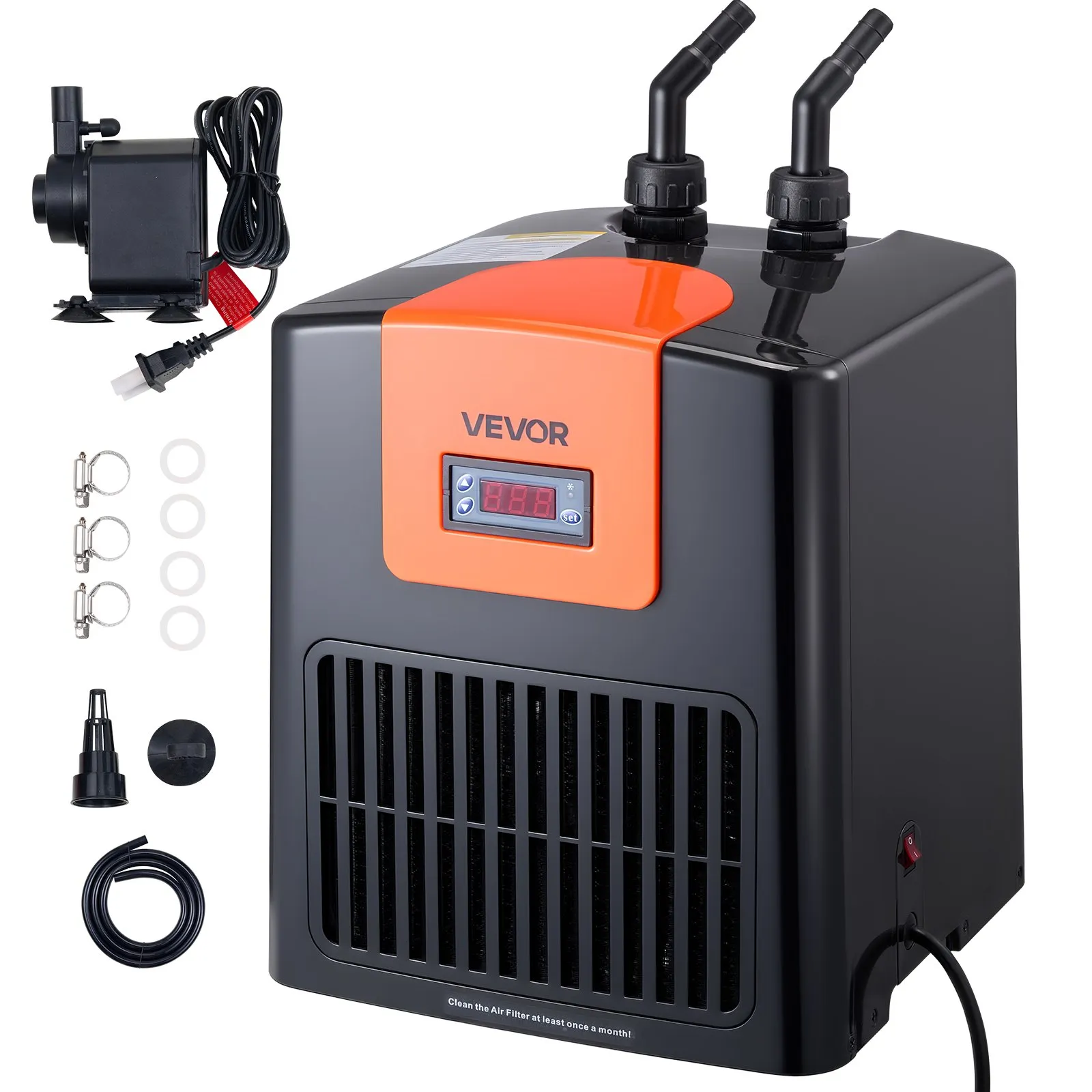
For barrel plunges, smaller stock tanks, and dedicated tubs under 60 gallons, the 52-gallon 1/10 HP Vevor is the best value on the market right now. At $283.90 it costs less than one month of membership at some commercial cold plunge facilities, and it delivers equivalent temperature control in your own home.
The unit's compact black housing fits easily in tight spaces and runs quietly enough for indoor use. It ships with a submersible pump, hose fittings, and clamps — everything needed for a complete setup. Digital temperature display and simple set-point controls make it accessible without a learning curve.
Best for: Budget buyers, smaller tubs, beginners, indoor residential setups.
Limitation: Limited headroom in warm conditions or large volumes. Step up to the 110-gallon model if either applies to you.
2. Vevor 110 Gallon, 1/3 HP — Best all-rounder
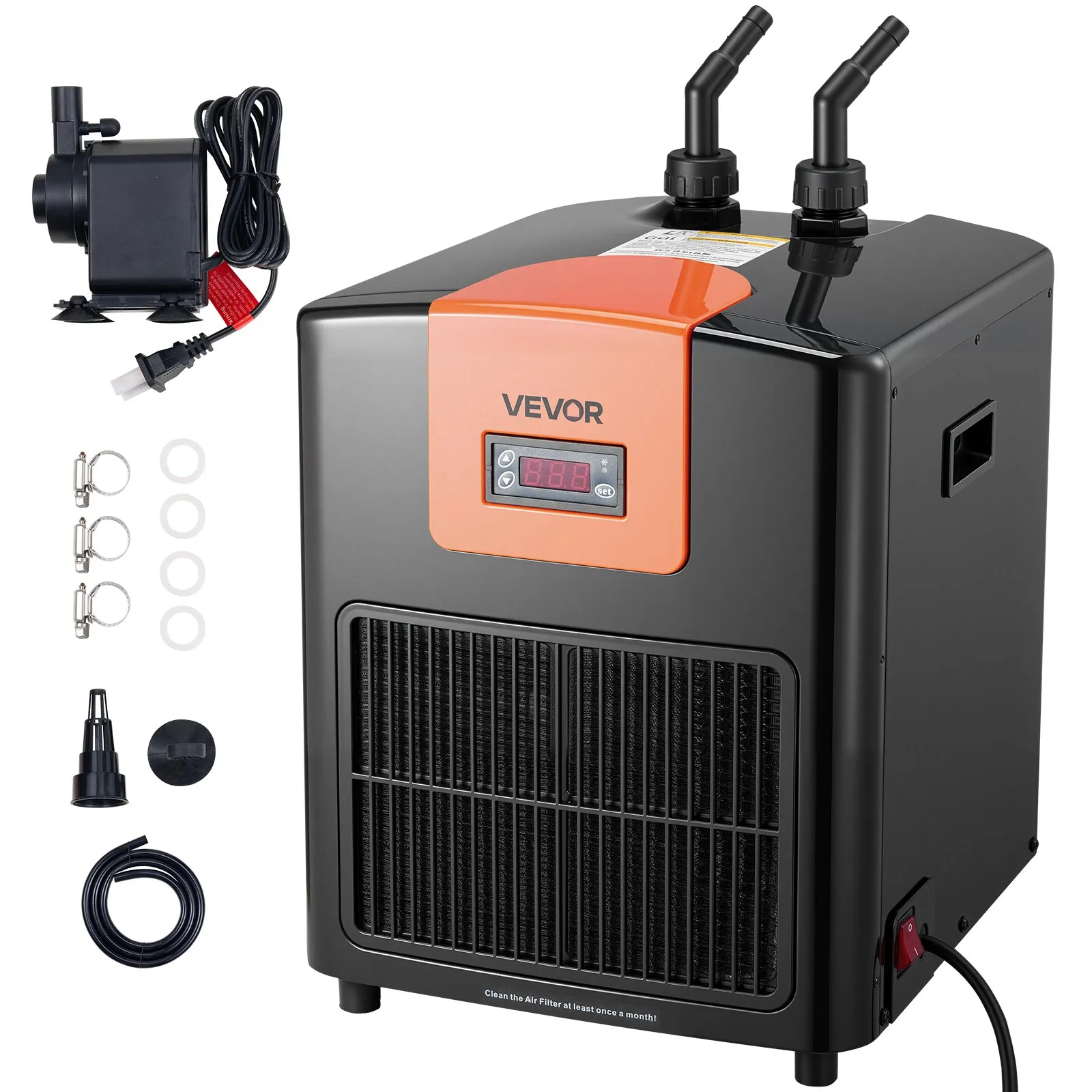
If you want to buy once and not think about it again, the 110-gallon model is the right call. The extra HP headroom means it maintains temperature reliably across a wider range of conditions — warmer rooms, larger tubs, more frequent use — without running at its limits.
At $389.90 the price difference from the 52-gallon unit is $106. For most buyers that's a worthwhile premium for the additional reliability and flexibility. It's the unit we'd recommend to anyone who isn't on a very tight budget or working with a very small tub.
Best for: Daily users, larger tubs (60–110 gallons), warm climates, households with multiple users.
Cold plunge temperature protocols
Having a chiller that holds precise temperatures makes it possible to follow evidence-based protocols rather than guessing. Here are the most commonly cited ranges and what the research suggests they're good for:
- 57–60°F (14–15°C): Entry-level cold exposure. Good for beginners building tolerance. Still produces measurable vasoconstriction and norepinephrine response.
- 50–57°F (10–14°C): The most commonly researched range for athletic recovery and mood effects. Huberman Lab's protocol (11 minutes per week total) falls here.
- 45–50°F (7–10°C): Advanced cold exposure. Requires acclimatisation. Research on brown adipose tissue activation is mostly conducted at these temperatures.
- 39–45°F (4–7°C): Extreme cold. Not recommended for beginners. All Vevor chillers can reach 39°F but this range should only be approached with significant prior experience.
All three Vevor models cover the full range from 39°F upward, so any of them gives you room to progress through protocols as your tolerance builds.
For detailed temperature and timing guidance see our cold plunge temperature guide and our sauna and cold plunge contrast therapy guide.
Once your chiller is set up, see our cold plunge water maintenance guide for filtration, sanitation, and water change schedules.
Building your own cold plunge tub? See our complete DIY cold plunge build guide →
Also considering Plunge Chill? See our Plunge Chill chiller review for an honest assessment of the $499 budget option.
FAQs
What temperature should a cold plunge be?
Most evidence-based protocols target 50–59°F (10–15°C). Beginners often start at the warmer end and work down over weeks. All Vevor chillers on this list reach 39°F, giving you the full range.
How long should a cold plunge session be?
Research varies but most protocols suggest 2–11 minutes per session depending on temperature. At 50°F, 3–5 minutes is commonly cited as sufficient for recovery benefits. Total weekly cold exposure of 11 minutes across multiple sessions is the figure most associated with Huberman Lab's widely cited protocol.
Can I leave the chiller running all the time?
Yes — Vevor's units are rated for continuous operation. The compressor cycles on and off to maintain temperature. Running continuously is gentler on the compressor than repeated full start-stops.
How long does temperature recovery take between sessions?
After a 5–10 minute session in a 60-gallon tub, expect the 52-gallon chiller to recover to target temperature in 20–35 minutes. The 110-gallon model recovers faster — approximately 15–25 minutes — due to additional capacity headroom. Tub insulation significantly reduces these times.
Do I need a filter as well as a chiller?
A basic sediment filter or UV steriliser is worth adding for regular cold plunge use. Without filtration, biological growth can occur over time even with cold water. Some users add a small amount of food-grade hydrogen peroxide or a pool-safe sanitiser to manage water quality between full changes.
Can I use a chest freezer instead of a chiller?
Yes — chest freezer cold plunge conversions are popular and work well. The freezer provides excellent insulation (often better than purpose-built tubs) and a standalone chiller connected to it handles the cooling. Many users disable the freezer's own compressor to avoid redundant energy use and just use it as an insulated vessel.
Also considering Eonix? See our Eonix water chiller review for a comparison of their full lineup.
Need help deciding between 1/4 HP and 1/2 HP? See our complete HP sizing guide with BTU data and Joe Krause’s durability testing log.