What Size Water Chiller Do I Need? HP Calculator by Tank Size
In this guide
Undersizing is the single most common mistake water chiller buyers make. Buy too small and the compressor runs constantly, struggles to hit target temperature, wears out faster, and performs worst exactly when you need it most — on hot days. This guide cuts through the confusion and gives you a simple framework to match horsepower to your actual water volume and setup conditions.
Every size recommendation below links directly to the Vevor model that fits that tier — so once you know your number, you can go straight to the right product.
Quick reference: HP by water volume
Use this table as your starting point. Find your water volume in the left column, then follow across. The "our pick" column links directly to the best Vevor unit for that tier.
| Water volume | Recommended HP | Ambient temp note | Our pick | Price | Link |
|---|---|---|---|---|---|
| Up to 52 gallons | 1/10 HP | Works well indoors ≤75°F | Vevor 52 Gal, 1/10 HP | $283.90 | View → |
| 52–110 gallons | 1/3 HP | Best all-round indoor choice | Vevor 110 Gal, 1/3 HP | $389.90 | View → |
| 110–200 gallons | 1/3–1/2 HP | Step up if ambient >80°F | Vevor 110 Gal or 500 Gal | $389–$905 | View → |
| 200–500 gallons | 1-1/2 HP | Outdoor/warm garage — this unit | Vevor 500 Gal, 1-1/2 HP | $905.90 | View → |
| 500+ gallons | 2 HP+ | Commercial — consider used market | Used industrial chiller | $150+ | Browse → |
Factors that affect sizing
The table above assumes a climate-controlled indoor space around 70°F and standard tap water starting temperature. Real-world conditions vary, and getting sizing wrong is expensive. Here are the variables that matter most:
Ambient temperature
This is the biggest variable most buyers ignore. A chiller's rated capacity is tested at a specific ambient temperature — usually around 68°F. Every 10°F above that reduces effective cooling capacity by roughly 10–15%. A 1/10 HP unit that easily holds 50°F in a 68°F basement will struggle in a 85°F garage. The rule: if your setup is in a warm space, size up one tier.
Target temperature vs starting temperature
The bigger the temperature drop required, the harder the chiller works. Dropping tap water from 65°F to 50°F for an ice bath is a 15°F delta. Dropping it to 39°F (the minimum for most units) is a 26°F delta — significantly more load on the compressor. For cold plunge protocols targeting 50–55°F, the 1/10 HP handles smaller tubs comfortably. If you want to regularly hit 39–45°F, size up.
Frequency of use
A chiller used once a week for a quick ice bath has very different demands from one running 24/7 for a daily cold plunge or an aquarium. For continuous operation, a unit running at 60–70% of its maximum capacity lasts significantly longer than one constantly maxed out. If you're running the chiller all day every day, size up from what the volume table suggests.
Tub insulation
Insulated tubs — foam-wrapped stock tanks, chest freezer conversions, purpose-built cold plunge vessels — retain cold water far better than bare metal or uninsulated containers. A well-insulated 80-gallon tub may perform better with a 1/10 HP unit than a bare 50-gallon tub in a warm room. Insulation is the cheapest way to improve chiller performance without buying a bigger unit.
Pump compatibility
Flow rate (measured in gallons per minute, GPM) affects how quickly the chiller can pull heat from your water. Too low a flow rate and the chiller's evaporator can't transfer heat efficiently. Too high and you create back pressure. The Vevor units ship with matched pumps — use them before swapping to a third-party pump. If you must upgrade, stay within the manufacturer's recommended flow range.
Sizing by use case
Ice bath sizing
Most dedicated ice bath tubs hold 80–120 gallons. The Vevor 110-gallon 1/3 HP is the correct match for this range in a normal indoor environment. If your ice bath is in a warm garage or you're targeting temperatures below 45°F consistently, step up to the 500-gallon model for headroom. For the full breakdown of ice bath chiller options, see our best water chillers for ice baths guide →
Cold plunge sizing
Cold plunge setups vary more widely in volume than ice baths. Barrel plunges run 40–60 gallons — the 52-gallon 1/10 HP Vevor is the sweet spot. Stock tank plunges at 100–150 gallons need the 1/3 HP. For daily use with multiple sessions, account for temperature recovery time — a larger unit recovers faster between plunges. Full guide: best water chillers for cold plunge →
Aquarium sizing
The aquarium rule of thumb is roughly 1 HP per 100 gallons, but aquariums lose heat more slowly than open tubs — you can often size down slightly. A 1/10 HP unit handles tanks up to 52 gallons reliably. For reef tanks where temperature consistency is critical, don't push the limits — match or slightly oversize. Full guide: aquarium water chiller guide →
Hydroponic sizing
DWC reservoirs are typically 20–50 gallons. The 52-gallon 1/10 HP Vevor covers most grow tent setups. For multi-tent operations or large commercial reservoirs, step up to the 110-gallon model. Full guide: hydroponic water chiller guide →
CO2 laser sizing
CO2 laser cooling is less about volume and more about flow rate and temperature precision. The Vevor CW-5200 is purpose-built for this application and is the correct choice regardless of your laser wattage (up to 130W). Don't size a laser chiller by tank volume — use a purpose-built unit. Full guide: CO2 laser water chiller guide →
Our picks at each size tier
Every unit below is available through our Vevor CJ affiliate partnership. Clicking through and buying supports ChillDive at no extra cost to you.
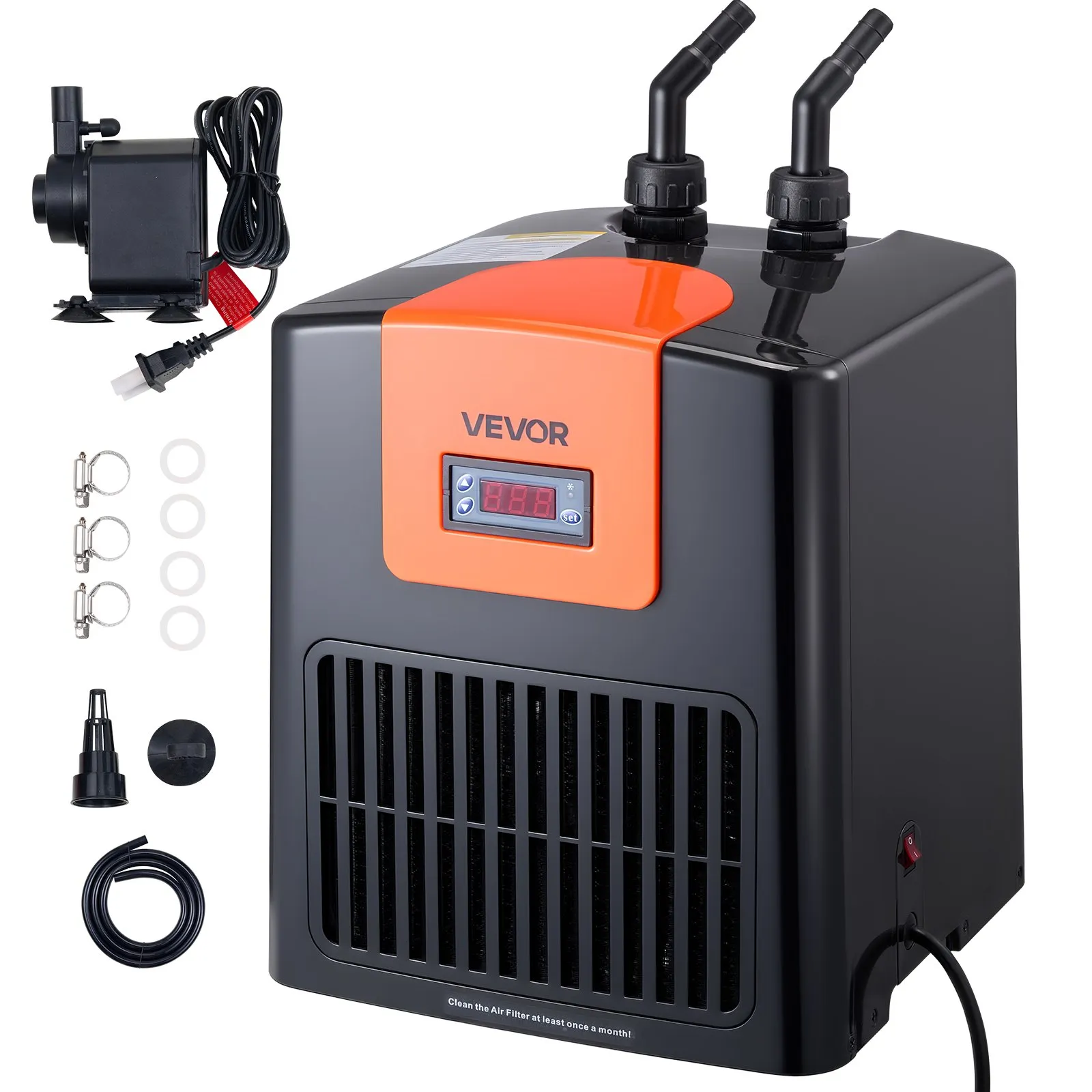
Vevor Aquarium Chiller 52 Gallon, 1/10 HP
The entry point for real refrigeration-based chilling. Handles cold plunge barrels, small stock tanks, DWC reservoirs, and aquariums under 52 gallons. Quiet, compact, pump included.
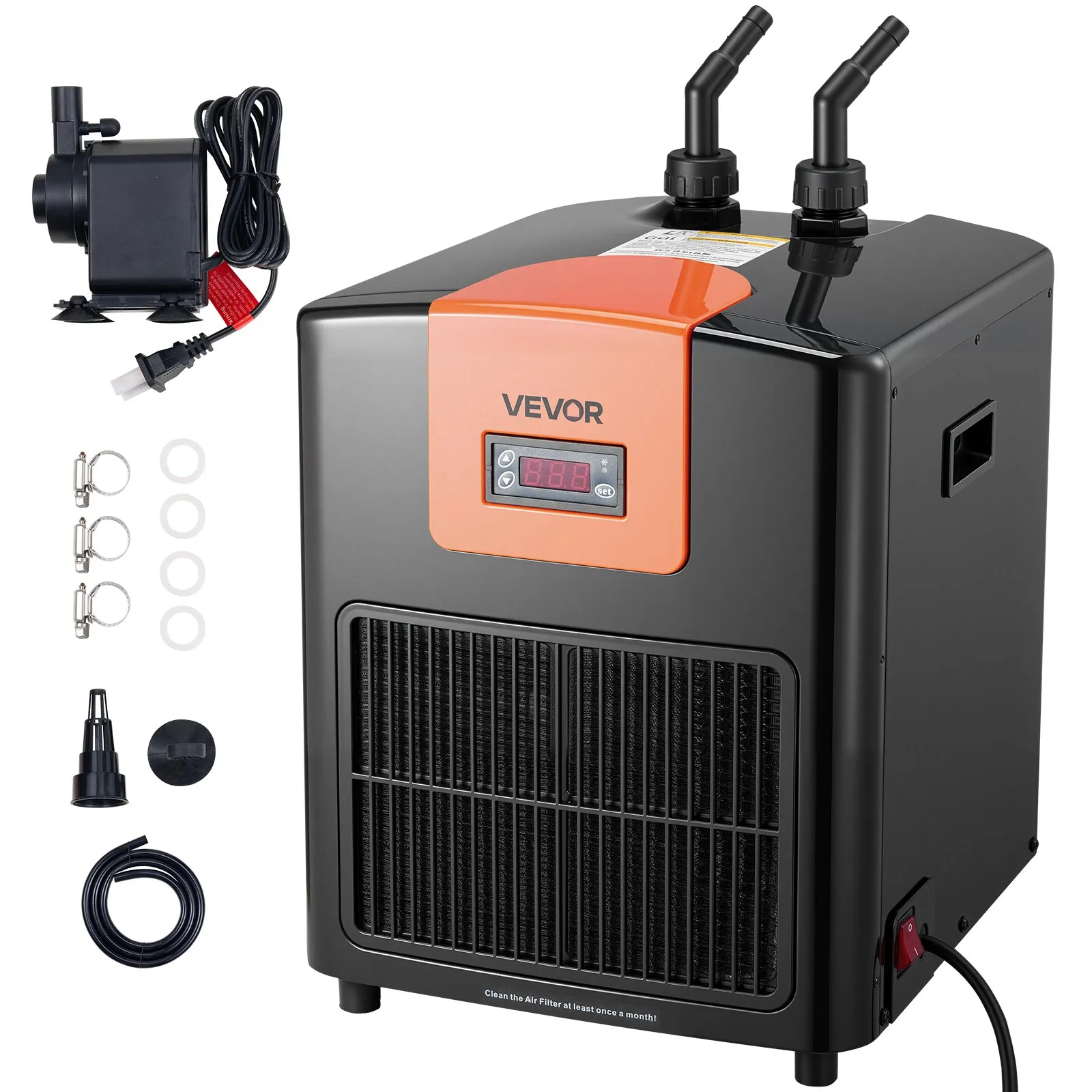
Vevor Aquarium Chiller 110 Gallon, 1/3 HP
Our top recommendation for most ice bath and cold plunge setups. Covers the widest range of common applications — stock tanks, ice bath tubs, aquariums up to 110 gallons. Reliable, quiet, and well-priced.
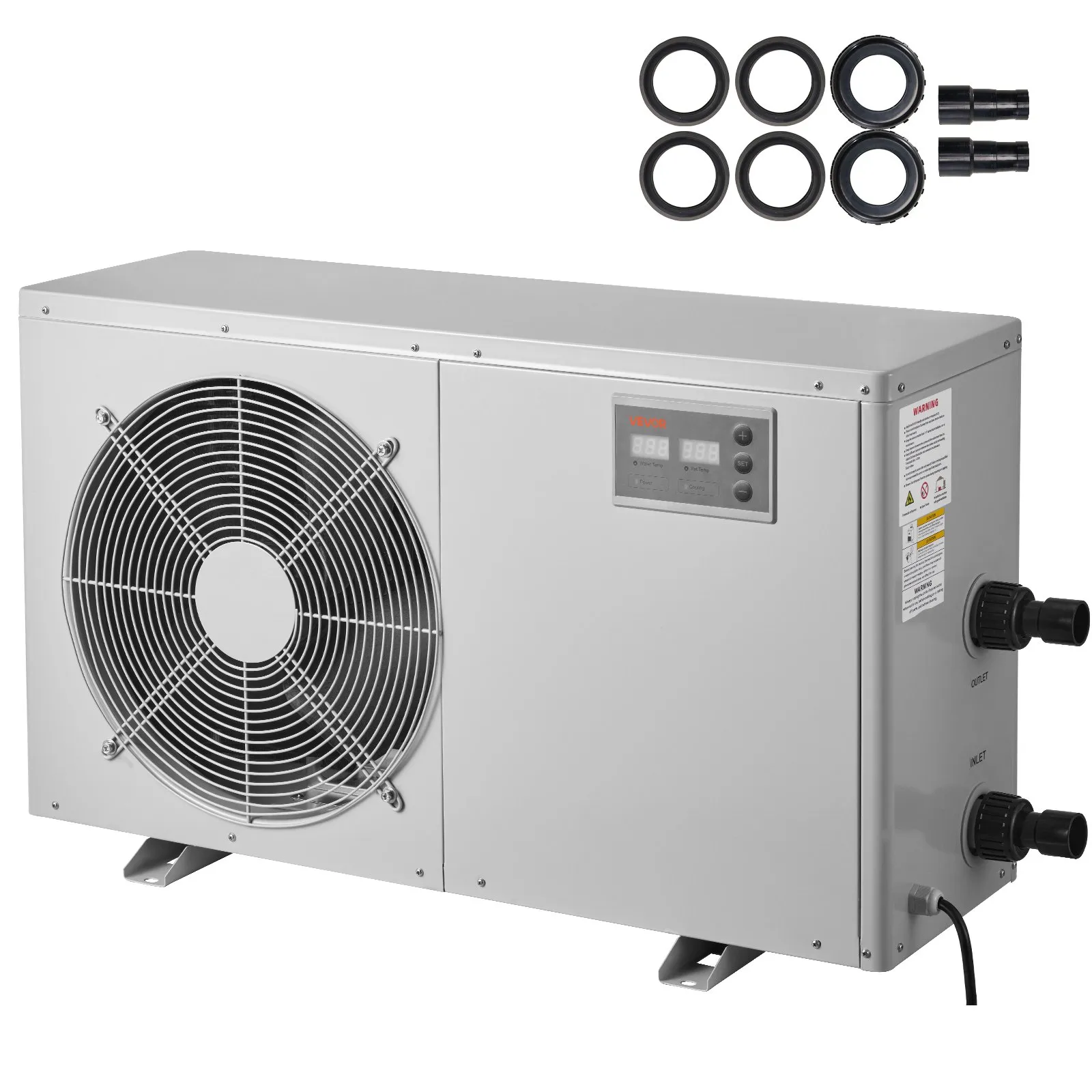
Vevor Aquarium Chiller 500 Gallon, 1-1/2 HP
Full-size outdoor unit for large volumes, warm climates, and commercial applications. Significant headroom means it handles demanding conditions without working at its limits.
For a deep dive on 1/4 HP vs 1/2 HP specifically for cold plunge builds, including BTU data and real-world durability testing, see our 1/4 HP vs 1/2 HP cold plunge chiller guide →
FAQs
What happens if I buy a chiller that's too small?
The compressor runs continuously trying to reach target temperature, often without success. In warm conditions it may not hit your target at all. Long-term, a unit running at 100% load wears out significantly faster than one cycling normally. Undersizing is more damaging to a chiller than oversizing.
Is it better to oversize a water chiller?
Generally yes — a slightly oversized chiller runs more efficiently, cycles less often, and lasts longer. The main downside is cost. There's no performance penalty to running a larger unit on a smaller volume of water, so when in doubt, size up rather than down.
Do I need to account for the pump when sizing?
No — the HP rating on water chillers refers to the refrigeration compressor, not the circulation pump. The pump is separate. However, make sure your pump's flow rate falls within the chiller manufacturer's recommended range — too low reduces cooling efficiency, too high can cause back pressure issues.
How does ambient temperature affect chiller performance?
Significantly. Chillers release heat through their condenser coil — if the surrounding air is already hot, the condenser has to work harder to dump heat. Most consumer chillers are rated to around 95°F ambient, but performance degrades noticeably above 80°F. If your setup is in a hot garage or outdoors in summer, size up by one tier from what the volume table suggests.
Can I use one chiller for multiple tanks or tubs?
Yes, but you need to add the volumes together and size accordingly. Two 50-gallon tanks running off one chiller require a unit sized for 100 gallons minimum. You'll also need a way to split the flow between tanks, which adds plumbing complexity. For simplicity, one chiller per vessel is the cleaner approach.
What's the difference between 1/10 HP and 1/3 HP in practice?
The 1/10 HP Vevor (52 gallon model) reaches the same minimum temperature as the 1/3 HP (110 gallon model) — both go to 39°F. The difference is capacity and speed. The 1/3 HP cools a larger volume faster, recovers quicker between sessions, and handles warmer ambient conditions more comfortably. For tubs under 52 gallons in a cool indoor space, the 1/10 HP is fine. For anything larger or warmer, the 1/3 HP is worth the extra $106.