Baoshishan Aquarium Chiller Troubleshooting Guide (AL-60, AL-160, AL-300)
In this guide
The Baoshishan aquarium chiller is one of the most widely sold compact water chillers on Amazon, used for aquariums, axolotl tanks, hydroponic reservoirs, and cold plunge setups. Most problems users encounter — not cooling, display errors, temperature not reaching the set point — are installation or setup issues rather than hardware failures. This guide walks through every common symptom systematically using the official Baoshishan manual as the source.
If you bought your unit on Amazon, the manufacturer operates as Boshi Electronic Instrument (US store) and can be reached at alismile2014@hotmail.com with a 24-hour reply time and a 12-month warranty.
Identify your model
| Model | HP | Max water volume | Cooling method | Pipe diameter |
|---|---|---|---|---|
| AL-60 | 200W electronic | Up to 60L (16 gal) | Electronic (Peltier/TEC) | 8mm inner diameter |
| AL-160 | 1/10 HP | Up to 160L (42 gal) | Compressor (R134a) | 12mm inner diameter |
| AL-300 | 1/3 HP | Up to 300L (79 gal) | Compressor (R134a) | 12mm inner diameter |
The AL-60 uses electronic (Peltier/TEC) cooling, not a compressor. It can only reduce water temperature a few degrees below ambient. It is NOT suitable for cold plunge, ice bath, or any application requiring sub-60°F water. If you need cold plunge temperatures, see the replacement section below. The AL-160 and AL-300 use compressor refrigeration and are capable of meaningful cooling.
Before first use — critical steps
Skipping these steps is the cause of most early failures reported in Amazon reviews:
- AL-160 and AL-300 only: Allow the chiller to stand upright for 24 hours after receiving before powering on. The compressor oil must settle after shipping. Starting immediately can cause compressor damage.
- Do NOT plug in power before completing the full installation and confirming no leaks.
- The compressor will start approximately 3 minutes after you set the temperature — this delay is normal, not a fault.
- AL-60 only: The temperature probe MUST be placed in the water before powering on. Without the probe submerged, the AL-60 cannot detect or cool the water.
Chiller not cooling or not reaching temperature
This is the most common complaint. Before assuming a hardware fault, work through this checklist:
1. Check the water volume
This is the most common cause. The AL-160 is rated for up to 160L (42 gallons) and the AL-300 for up to 300L (79 gallons) — but these are maximum ratings under ideal conditions. In a warm room with a warm starting temperature, real-world effective capacity is significantly lower. If your tank or tub is at or near the maximum rated volume, reduce the water volume first before anything else.
2. Check ambient temperature
The manual specifies maximum ambient operating temperature of 35°C (95°F). Above this, the chiller’s cooling efficiency drops significantly. In a hot room, garage, or outdoor setup above 85°F, the AL-160 or AL-300 will struggle to reach low target temperatures. If this is your situation, improve room ventilation or relocate the unit.
3. Check the 3-minute delay
After setting the temperature, the compressor waits approximately 3 minutes before starting. If you set the temperature and immediately expect cooling, you will see nothing for 3 minutes. This is normal. Wait for the compressor to audibly activate.
4. Check pump flow rate
The AL-160 and AL-300 require a pump with 600–1,500 L/H flow rate. The AL-60 requires 320 L/H. Too low a flow rate and water sits in the heat exchanger too long; too high and pressure can cause leaks. Confirm your pump output is within the specified range.
5. Check for bent or kinked tubing
A kinked water hose restricts flow and can reduce cooling performance to near zero. Inspect all tubing from pump to chiller and back.
Full troubleshooting table
| Symptom | Likely cause | Step-by-step fix |
|---|---|---|
| Not working at all — no display | No power; blown fuse; wrong voltage socket | 1. Confirm the power plug is fully seated. 2. Test the outlet with another device. 3. Check circuit breaker. 4. Confirm 110V outlet (the unit runs on AC110V). 5. If the cord is damaged, do not use — contact Boshi Electronic Instrument. |
| Powers on but compressor does not start | Normal 3-minute delay; or water temperature already at set point | 1. Wait 3 full minutes after setting temperature. 2. Confirm the set temperature is BELOW the current water temperature. If water is already at or below set point, the compressor will not run. 3. Check the temperature reading on the display is plausible for your water. |
| Running continuously but not reaching set temperature | 1. Water volume too large. 2. Ambient temperature too high. 3. Poor ventilation around unit. 4. Kinked tubing restricting flow. | 1. Reduce water volume first — the most effective fix. 2. Ensure the room is below 95°F; improve ventilation. 3. Check all tubing for kinks. 4. Verify 12-inch clearance on all sides of the unit. 5. Insulate the vessel with foam board to reduce heat gain. |
| Water does not circulate | 1. Air in the water pipe. 2. Twisted or kinked tubing. 3. Circulation pump stopped or blocked. 4. Water level too low to reach pump intake. | 1. Check all pipes for air pockets — keep all circuits full of water. 2. Inspect tubing for kinks; straighten carefully. 3. Remove and inspect the pump for blockages. 4. Top up water level if the pump intake is exposed. 5. Re-prime the system by filling the tubing manually before powering on. |
| Water leaking at connections | 1. Fittings not fully tightened. 2. Sealing rings missing or incorrectly positioned. 3. Tubing not fully seated. | 1. Power off and unplug immediately. 2. Drain the water system. 3. Disassemble the leaking fitting. 4. Confirm sealing rings are correctly seated at each connection point. 5. Reassemble and hand-tighten, then firm with a wrench. 6. Refill and test before restarting. If leakage persists, contact Boshi Electronic Instrument. |
| Poor cooling effect or inability to cool | 1. Ambient temperature above 95°F. 2. Water volume exceeds chiller capacity. 3. Chiller in a sealed or poorly ventilated space. 4. Tubing bent, reducing water flow. 5. Height of circulation pump above tank surface too great. | 1. Reduce ambient temp below 35°C / 95°F or improve ventilation. 2. Reduce water volume. 3. Move chiller out of enclosed cabinet or add ventilation. 4. Check and straighten all tubing. 5. Check pump head height — if excessive, reduce or replace pump. 6. Insulate the vessel. |
| Wet ground around unit | Condensation from cold water pipes dripping | This is normal in humid environments — the chilled pipes sweat condensation just like a cold drink glass. Wipe droplets from pipe surfaces and the tank wall. Use pipe insulation wrap on the chiller outlet tubing to reduce condensation if it is excessive. |
| Abnormal noise | 1. Air trapped in the water pipe. 2. Unit not on a level surface. 3. Unit tilted during use. | 1. Purge air from the system by ensuring all circuits are completely water-filled. 2. Confirm the unit is on a flat, level surface. 3. Do NOT tilt or turn upside down while in use — if tilted, stand upright and wait before restarting. 4. If noise is a grinding or rattling from the compressor area, contact Boshi support. |
| Display shows three dashes (---) | Temperature probe is abnormal — either faulty, disconnected, or not in water (AL-60) | 1. AL-60: Confirm the temperature probe is fully submerged in the water. 2. AL-160/AL-300: Check the probe connection at the unit. 3. If the probe appears physically damaged, replace it. Contact Boshi Electronic Instrument for a replacement probe. |
| Display temperature does not match actual water temperature | Normal sensor variance; or probe needs recalibration | The Baoshishan supports temperature correction via the F1/F2 function. See the temperature correction section below for exact steps. The acceptable tolerance is ±2°F; differences larger than this indicate a probe issue. |
Display errors
| Display shows | Meaning | Action |
|---|---|---|
| --- (three dashes) | Temperature probe abnormal — not detected or faulty | AL-60: ensure probe is submerged. AL-160/300: check probe connection. If persists, replace probe. |
| "cool" visible on display | Normal — chiller is actively cooling | No action needed. “cool” is only displayed during active cooling operation, not in standby mode. |
| No "cool" showing but compressor is running | Not an error — the display only shows "cool" in certain modes | Listen for the compressor. If the compressor hum is present and water is circulating, the unit is working normally. |
How to set and correct temperature
Setting target temperature
Example: setting 75–79°F target range
- Press SET → adjust to 75 (your target low) → press RST to confirm
- Long-press SET until F1 appears → press SET again → press ▲/▼ to set temperature difference to 4 (the gap between start and stop cooling)
- Result: chiller starts cooling at 79°F and stops at 75°F
Correcting temperature display (F2 calibration)
If the display temperature does not match an accurate thermometer in your water, calibrate using the F2 function:
- Long-press SET until F1 appears
- Press ▲ to move to F2 (temperature correction mode)
- Calculate offset: offset = actual water temp − displayed temp
- Press ▲ or ▼ to enter the offset value
- Press SET or wait for timeout to confirm
Common installation mistakes
Not waiting 24 hours before first start (AL-160 and AL-300)
The most damaging mistake. Compressor oil shifts during shipping. Starting the compressor immediately after delivery before the oil settles can cause immediate internal damage. Always stand the unit upright and wait 24 hours before the first power-on.
AL-60 probe not in water
The AL-60 electronic chiller requires the temperature probe to be placed in the water before powering on. Without the probe submerged, the display will show three dashes (---) and the unit cannot operate. This is the single most common AL-60 issue reported by new users.
Wrong pump flow rate
AL-160 and AL-300 require a pump rated 600–1,500 L/H. A pump too weak reduces cooling efficiency; a pump too strong can cause leaks at the connection points. Check your pump’s rated output against these specifications.
Inlet and outlet on the same side of the tank
Position the chiller’s inlet (drawing water from the tank) and outlet (returning chilled water) on opposite sides of the tank. Placing them close together causes the chilled water to be immediately drawn back into the chiller without circulating through the full water volume, resulting in poor temperature performance.
Chiller in an enclosed cabinet with no ventilation
The AL-160 and AL-300 use compressor refrigeration that exhausts heat to the surrounding air. In a sealed cabinet, this heat recirculates and the chiller operates against its own waste heat. Always provide at least 12 inches of clearance on all sides, or use a ventilated cabinet with an exhaust fan.
Cleaning and maintenance
The official Baoshishan manual recommends cleaning every 2–3 months to prevent clogging from mineral and biofilm buildup that reduces cooling efficiency:
| Task | Frequency | Method |
|---|---|---|
| Full internal cleaning | Every 2–3 months | Power off and unplug. Flush all water-contact components with clean water. For calcium and mineral deposits: circulate a 2:3 distilled vinegar-to-water solution through the chiller for 20–30 minutes, then flush thoroughly with clean water. Do not use detergent, gasoline, or harsh chemicals. |
| Air filter cleaning | Monthly | The manual specifically states: “Clean the air filter at least once a month.” This text is printed on the unit itself. Remove the foam air filter panel and rinse with water; allow to dry fully before replacing. A clogged air filter is the most common cause of reduced cooling efficiency over time. |
| Exterior wipe-down | Monthly | Use a clean, soft damp cloth on the shell and top cover. Do NOT use a wet cloth on the operating panel, plug, or power cord. Do not immerse any part of the chiller in water for cleaning. |
| Tubing inspection | Monthly | Check all hose connections for dripping or weeping. Retighten any loose hose clamps. Inspect tubing for cracking or deterioration, particularly near connection points. |
| Vinegar descale | Quarterly or when cooling degrades | Circulate 2 parts 100% distilled vinegar to 3 parts water through the heat exchanger using the feed pump with a 5-gallon bucket as reservoir. Run for 20–30 minutes, flush with clean water. This removes calcium deposits, salt creep, and mineral buildup that reduce efficiency. |
When to replace vs repair
The Baoshishan is an Amazon-native brand with a 12-month warranty handled through the seller (Boshi Electronic Instrument). After the warranty period, repair support is limited. Here is a practical decision framework:
- Replace if: compressor fails after warranty period, refrigerant leaks (adding refrigerant yourself is not recommended and professional service cost often exceeds unit value), or the unit is the AL-60 and you need sub-60°F temperatures (it is the wrong tool; electronic cooling cannot reach cold plunge temperatures)
- Repair first if: display issues, probe errors, water leaks at fittings, or flow problems — these are almost always fixable without professional service
- Consider upgrading if: you need colder water than the Baoshishan consistently delivers. The AL-160 (1/10 HP) uses R134a refrigerant with a minimum temperature limitation; for consistent cold plunge temperatures the Vevor compact series using R32 refrigerant offers better minimum temperatures
Vevor alternatives if replacing
Both units below use R32 refrigerant (colder minimum temperature than the Baoshishan’s R134a), include a pump, and are available through our Vevor CJ affiliate partnership:
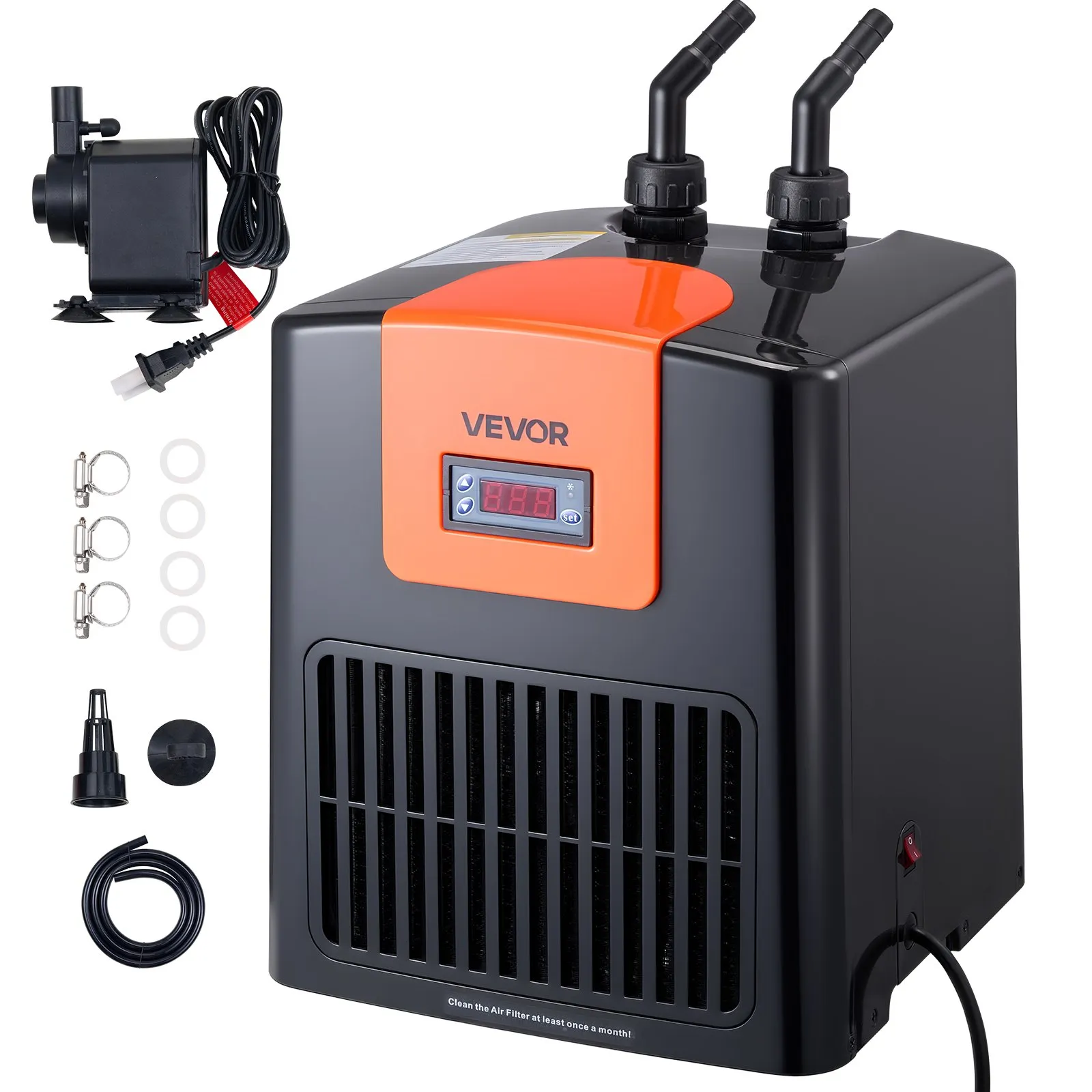
R32 refrigerant, reaches 39°F (vs AL-160’s R134a limitation), pump included, comparable capacity. Best upgrade path from the AL-160.
View on Vevor — $283.90 →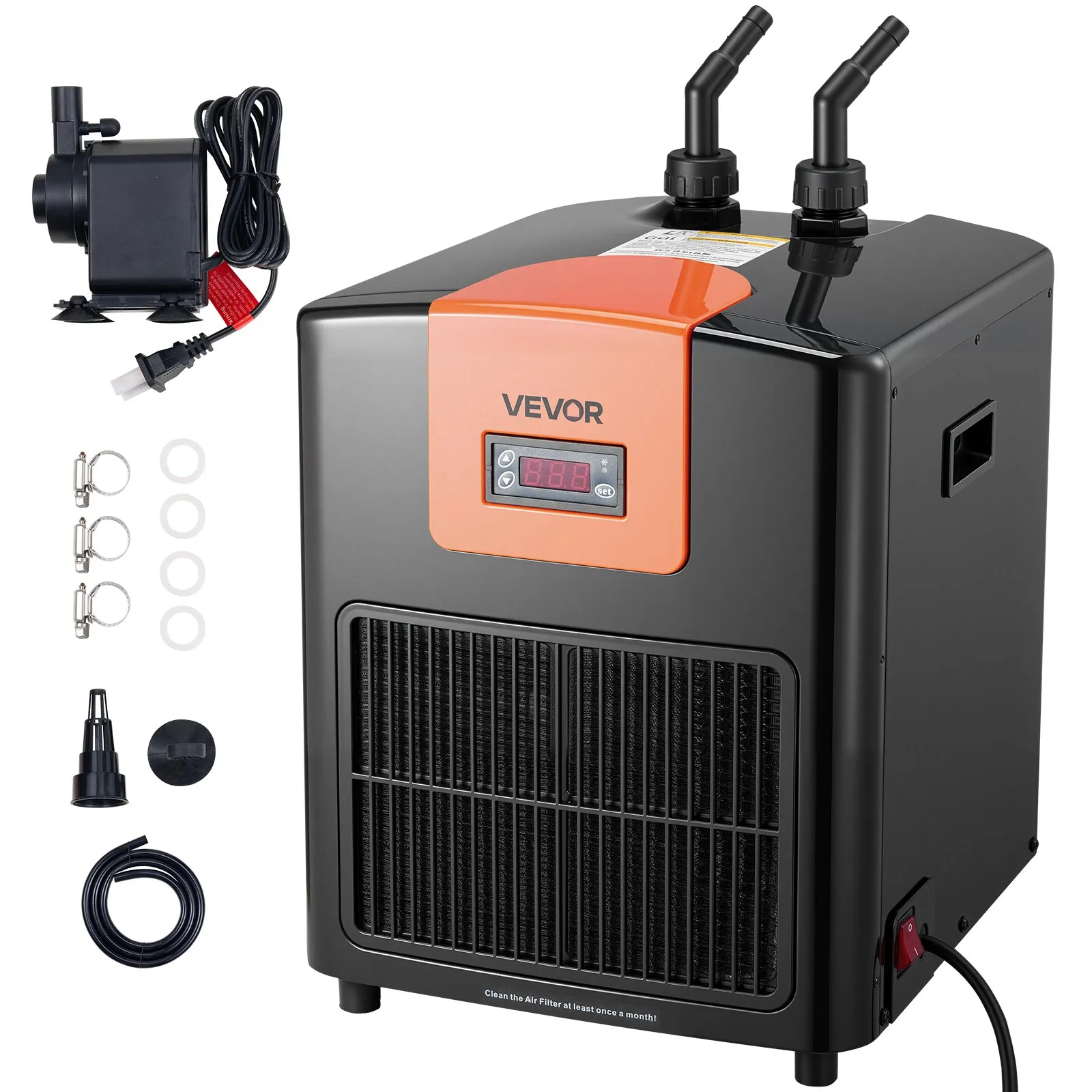
R32 refrigerant, 39°F minimum, handles up to 110 gallons, pump included. The natural step-up from the AL-300 with better cold performance.
View on Vevor — $389.90 →FAQs
Why is my Baoshishan chiller not reaching the set temperature?
Almost always one of four causes: water volume too large for the model, ambient temperature too high (above 95°F), insufficient ventilation around the unit, or kinked tubing restricting flow. Work through the checklist in the “not cooling” section above. Reducing water volume is the most effective first step.
What does --- mean on the Baoshishan display?
Three dashes indicate the temperature probe is not being detected. On the AL-60, confirm the probe is fully submerged in the water — this is required for the unit to operate. On the AL-160 and AL-300, check the probe connection at the unit. If the probe appears damaged, contact Boshi Electronic Instrument for a replacement.
How do I set the temperature on a Baoshishan chiller?
Press SET, adjust to your target low temperature using ▲/▼, then press RST to confirm. To set the temperature differential (the gap between when cooling starts and stops), long-press SET until F1 appears, press SET again, then adjust the differential value. See the temperature setting section above for a worked example.
How do I correct the temperature display on my Baoshishan?
Use the F2 calibration function: long-press SET until F1 appears, press ▲ to reach F2, then enter the offset value (actual water temperature minus displayed temperature). The display will then show corrected readings.
Can the Baoshishan AL-160 or AL-300 be used for cold plunge?
The AL-160 and AL-300 use R134a refrigerant which has a higher minimum temperature than R32-based chillers. For cold plunge use targeting 50–59°F, performance depends heavily on water volume and ambient conditions. Many users report success at moderate volumes in cool environments, but the Vevor compact series (R32, 39°F minimum) delivers more consistent cold plunge temperatures for the same or lower price. See our Vevor cold plunge guide for comparison.
How often should I clean my Baoshishan chiller?
The official manual states “clean the air filter at least once a month” — this instruction is printed on the unit. Full internal cleaning with a vinegar flush is recommended every 2–3 months. In hard water areas or saltwater applications, monthly descaling is advisable.
My Baoshishan AL-60 is barely cooling — is it broken?
Probably not broken — but likely being asked to do something it cannot do. The AL-60 uses electronic (Peltier) cooling, which can only reduce water temperature a few degrees below ambient air temperature. In a 75°F room it might reach 68–70°F at best. If you need sub-60°F water for cold plunge or aquarium species that require cool water, the AL-60 is the wrong unit. The AL-160 or AL-300 (compressor-based) are required for meaningful temperature reduction.
Where do I contact Baoshishan / Boshi Electronic Instrument for warranty support?
The US Amazon store operates as Boshi Electronic Instrument. Contact via Amazon messaging or directly at alismile2014@hotmail.com. The stated response time is within 24 hours. Have your model number (AL-60, AL-160, or AL-300), purchase date, and order number ready.
Also own a Poafamx chiller? The hardware is identical — see our Poafamx aquarium chiller troubleshooting guide →