Hydroponic Water Chiller Guide 2026: Temperature, Dissolved Oxygen & Top Picks
In this guide
- The core problem — why warm water is a silent killer
- Dissolved oxygen & temperature: the science
- Pythium root rot: the direct consequence
- How temperature kills nutrient uptake
- Why hydroponic reservoirs get hot
- Optimal temperatures by system type
- Sizing a chiller for your reservoir
- Top chiller picks for hydroponics
- Alternatives & complementary strategies
- Monitoring guide
- FAQs
Water temperature is the most underrated variable in hydroponics. Light cycles, nutrient formulations, pH management, and CO2 enrichment all receive detailed attention in most grower guides. Water temperature is the variable that silently undermines all of them — because when the reservoir gets warm, the root system loses the ability to absorb what the grower carefully provides.
This guide covers the science behind why temperature matters, what happens when it gets wrong, how to size a chiller for your system, and which units work best for hydroponic applications.
The core problem — why warm water is a silent killer
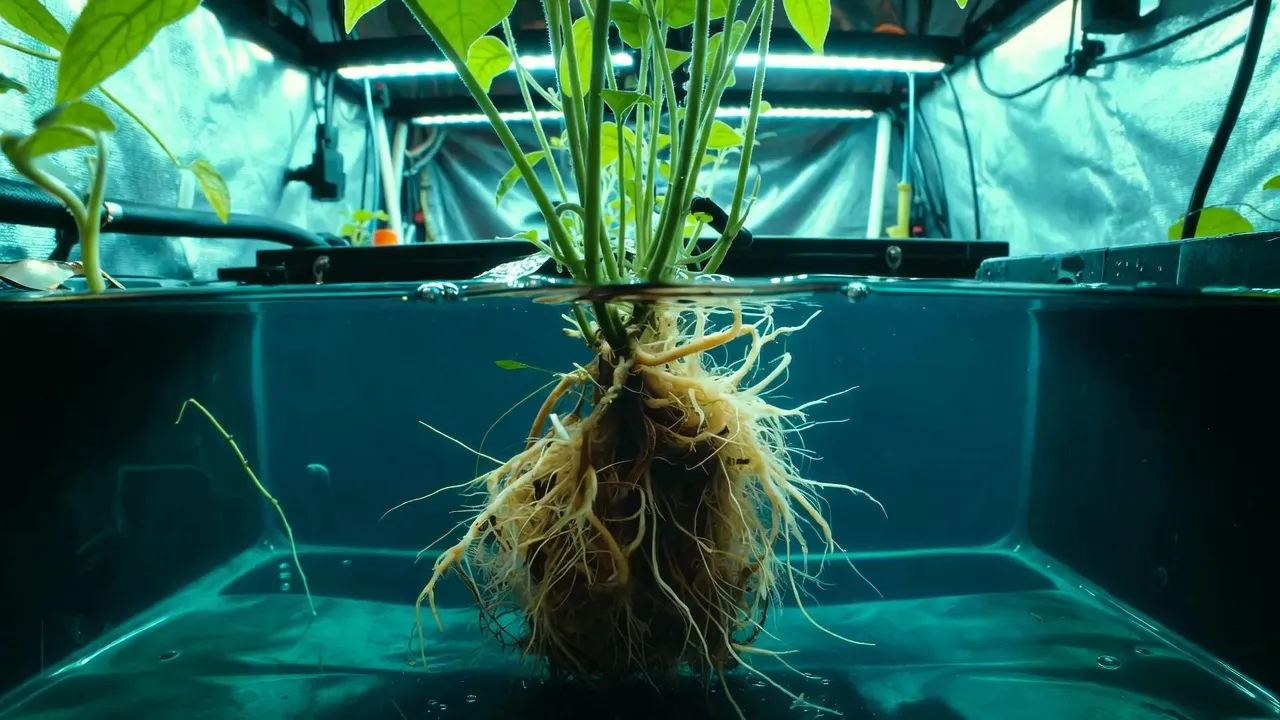
The case for water chillers in hydroponics starts with a principle of physics: warm water holds less dissolved oxygen than cold water. In a hydroponic system, where plant roots are submerged in or bathed by a nutrient solution rather than anchored in aerated soil, the dissolved oxygen concentration of that solution is not a secondary concern — it is the primary variable that determines whether the root system can function at all.
Soil-grown plants have a significant advantage in this respect. In nature, roots grow in soil where ground temperature is substantially cooler than air temperature, and where air spaces between soil particles provide direct oxygen contact to root surfaces. Hydroponic systems replicate the nutrient delivery function of soil but not its thermal and aeration properties. The nutrient solution heats up — from grow lights, submersible pumps, ambient air temperature, and direct sunlight — and as it warms, it loses its ability to carry the oxygen roots require.
Dissolved oxygen & temperature: the science
The relationship between water temperature and dissolved oxygen (DO) content is well-established in aquatic chemistry. As temperature increases, the maximum oxygen that can dissolve decreases. Here is what that means in practice for hydroponic systems:
| Water temperature | Saturated DO (mg/L) | Hydroponic implication |
|---|---|---|
| 59°F (15°C) | 10.1 mg/L | Excellent — aggressive aeration easily maintains 6+ mg/L |
| 64°F (18°C) | 9.5 mg/L | Optimal lower end — recommended for DWC targeting maximum DO |
| 68°F (20°C) | 9.1 mg/L | Optimal — the widely cited sweet spot for most hydroponic crops |
| 72°F (22°C) | 8.7 mg/L | Upper optimal — still adequate with good aeration; Pythium risk begins above this point |
| 77°F (25°C) | 8.3 mg/L | Warning zone — DO falls behind root oxygen demand; root browning risk increases |
| 82°F (28°C) | 7.8 mg/L | Danger zone — actual measured DO at this temp often <4 mg/L due to consumption rates |
| 86°F (30°C) | 7.6 mg/L | Critical — root death and Pythium explosion likely within 24–48 hours |
The critical threshold: 6 mg/L dissolved oxygen
Research from Hort Americas and Dr. Rosa Raudales establishes 6 mg/L as the minimum DO level for healthy root function:
- Below 6 mg/L: roots cannot efficiently absorb nutrients. Nitrogen, phosphorus, potassium, iron, and other minerals all require root cellular respiration — which requires oxygen — to be actively transported into the plant.
- Below 2 mg/L (hypoxic): severe oxygen starvation. Root cells die. Anaerobic pathogens including Pythium thrive.
- Below 0.5 mg/L (anoxic): complete oxygen absence. Total root system collapse.
A reservoir at 82°F with active microbial activity and no aeration can reach hypoxic conditions in hours, not days.
The double problem: temperature raises demand while reducing supply
The dissolved oxygen crisis in a warm reservoir is not simply that warm water holds less oxygen. It is that warm water simultaneously increases the oxygen consumption rate of the root system and its surrounding microbial community:
- Higher temperature increases root cellular respiration rate — roots at 82°F (28°C) consume 2–3 times more oxygen per hour than the same roots at 64°F (18°C)
- Higher temperature increases microbial respiration — bacteria and water molds in the solution also become more active, consuming DO that would otherwise reach the roots
- The net result: at 82–86°F, combined root and microbial oxygen demand can exceed maximum oxygen supply from aeration, causing DO to collapse even in well-aerated systems
Pythium root rot: the direct consequence of warm, low-oxygen water
Pythium is a water mold (oomycete) that is the most destructive pathogen in hydroponic production worldwide. It is not technically a fungus — it produces motile zoospores capable of swimming through the nutrient solution to find and infect plant roots. These zoospores are always present in most growing environments. The question is whether conditions favour their germination and proliferation.
How Pythium operates
- Pythium thrives above 72°F (22°C) — the well-documented threshold at which zoospore survival and infection rates increase substantially
- Pythium thrives in hypoxic conditions — when DO drops below 6 mg/L, root immune response weakens; near hypoxic levels, roots are essentially defenseless
- Pythium spreads through the nutrient solution — in recirculating systems (NFT, DWC, RDWC), a single infected root system can distribute zoospores to every plant within hours
Pythium progression
| Stage | Root symptoms | Above-ground symptoms | Timeline |
|---|---|---|---|
| Early | White root tips begin to brown; fine root hairs disappear; slightly slimy texture | None visible — plant appears healthy | Hours to 1–2 days |
| Moderate | Brown discoloration extends; root mass reduces; musty smell from reservoir | Slight wilting during peak light; minor yellowing of lower leaves | 2–5 days |
| Advanced | Roots brown to black; slimy texture; large portions of root system dead | Visible wilting, yellowing, downward leaf curl despite adequate moisture; growth halts | 5–14 days |
| Collapse | Root system largely destroyed; unable to absorb water or nutrients | Severe wilting; widespread yellowing; plant death; entire crop may be affected in recirculating systems | 1–3 weeks |
Maintaining nutrient solution below 72°F does three things simultaneously to prevent Pythium: reduces zoospore survival rates, keeps DO above the 6 mg/L protective threshold, and preserves root immune function. No amount of beneficial bacteria, hydrogen peroxide treatment, or nutrient adjustment can substitute for keeping the reservoir cool.
How temperature kills nutrient uptake
The symptoms of nutrient deficiency caused by warm, low-oxygen conditions are frequently misdiagnosed as a nutrient solution problem. Growers add more nutrients, adjust pH, increase dosage — none of which helps because the problem is not nutrient concentration but the root’s inability to absorb it.
Most critical mineral nutrients — nitrogen, phosphorus, potassium, calcium, magnesium, iron — are actively transported. They require root cells to spend ATP energy to move them from solution into the plant. ATP is produced by cellular respiration in root mitochondria, which requires oxygen. When DO falls below 6 mg/L, ATP production drops and active nutrient uptake slows or stops.
| Visible symptom | Appears to be | Actual cause (if water is warm) |
|---|---|---|
| Yellowing lower leaves | Nitrogen deficiency | Root hypoxia prevents active nitrogen uptake despite adequate solution concentration |
| Purple leaf undersides or stems | Phosphorus deficiency | Phosphorus active transport is highly oxygen-sensitive; first nutrient to show deficiency under low DO |
| Wilting despite wet medium | Water stress | Root cells cannot maintain osmotic gradient to draw water in; roots appear healthy initially but are functionally impaired |
| Tip burn on lettuce and leafy greens | Calcium deficiency | Calcium requires strong transpiration AND active transport; both impaired by root hypoxia |
| Slow growth, small leaves | General malnutrition | Overall metabolic rate reduced when root energy supply is compromised; plant cannot grow at genetic potential |
| Brown root tips | Root disease | Root tip meristem cells are most oxygen-sensitive; the earliest diagnostic sign before any above-ground symptoms appear |
Rule to remember: before adjusting nutrient concentration or adding supplements, check the reservoir temperature. White roots and 68°F water fix most apparent nutrient deficiency symptoms faster than any nutrient adjustment.
Why hydroponic reservoirs get hot
| Heat source | Typical contribution | Notes |
|---|---|---|
| HID grow lights (HPS, MH) | 5–10°F above ambient | Radiate significant infrared; air-cooled hoods help but do not eliminate reservoir heating |
| LED grow lights | 3–6°F above ambient | Better than HID but still contributes; LED advocates often understate heat contribution |
| Submersible pumps | 2–5°F above ambient | Every watt of pump power becomes heat deposited directly into the nutrient solution. External inline pumps avoid this. |
| Ambient room temperature | The baseline | A grow room at 80°F with pump and light heat can push a reservoir to 85–90°F easily |
| Solar gain | Up to 15°F in direct sun | Clear reservoir walls allow direct solar heating AND algae growth; use opaque walls |
The cumulative effect is that an indoor hydroponic system in a moderately warm environment — without active temperature management — will have a reservoir temperature 10–20°F above the optimal range during the warmest part of the day. A chiller is the only way to counteract the combined thermal load from all these sources simultaneously.
Optimal temperatures by system type
| System type | Optimal water temp | Temperature sensitivity |
|---|---|---|
| Deep Water Culture (DWC) | 65–68°F (18–20°C) | Highest — roots fully submerged, no oxygen buffer; chillers most critical for DWC; 75°F+ leads to rapid DO depletion |
| Recirculating DWC (RDWC) | 65–70°F (18–21°C) | High — recirculating flow adds some aeration; same pathogen risk; Pythium can spread to all plants rapidly |
| Nutrient Film Technique (NFT) | 65–72°F (18–22°C) | Moderate-High — thin film with air exposure above; HortScience 2024 confirmed 70°F optimal for lettuce in NFT |
| Ebb and Flow / Flood and Drain | 65–72°F (18–22°C) | Moderate — air gaps between flood events; slightly more thermal tolerance than DWC |
| Aeroponics | 65–75°F (18–24°C) | Lower — roots hang in air with misted solution; maximum aeration; most thermally tolerant of hydroponic systems |
| Media-based (rockwool, coco) | 68–77°F (20–25°C) | Lower — substrate provides air pockets and thermal buffering; chiller less critical but still beneficial in hot climates |
Sizing a chiller for your hydroponic reservoir
Key sizing variables
- Reservoir volume — more water requires more chilling capacity
- Ambient air temperature — a 68°F target in a 90°F room requires more capacity than the same target in a 75°F room
- Submersible pump heat — add 1/4 HP of chiller capacity for every submersible pump over 500 GPH in the reservoir
- Reservoir insulation — 2 inches of rigid foam board reduces effective chiller load by 20–40%; always insulate before sizing
- Real-world efficiency — manufacturer HP ratings are measured under standard conditions; reduce by 20–25% for a hot grow room
| Reservoir volume | Grow room temp | Recommended HP | Our pick |
|---|---|---|---|
| Up to 52 gallons | Up to 80°F | 1/10 HP | Vevor 52 Gal, 1/10 HP — $283.90 |
| 52–110 gallons | Up to 80°F | 1/3 HP | Vevor 110 Gal, 1/3 HP — $389.90 |
| 52–110 gallons | 80–90°F (hot room) | 1/3–1/2 HP | Vevor 110 Gal or step up |
| 110–200 gallons | Up to 80°F | 1/2–1 HP | See our full sizing guide |
Sizing rule of thumb: always size up to the next HP category for DWC systems. DWC has the lowest oxygen buffer and the narrowest temperature tolerance. An oversized chiller cycles efficiently; an undersized chiller runs continuously without reaching temperature and stresses the compressor.
Top chiller picks for hydroponics
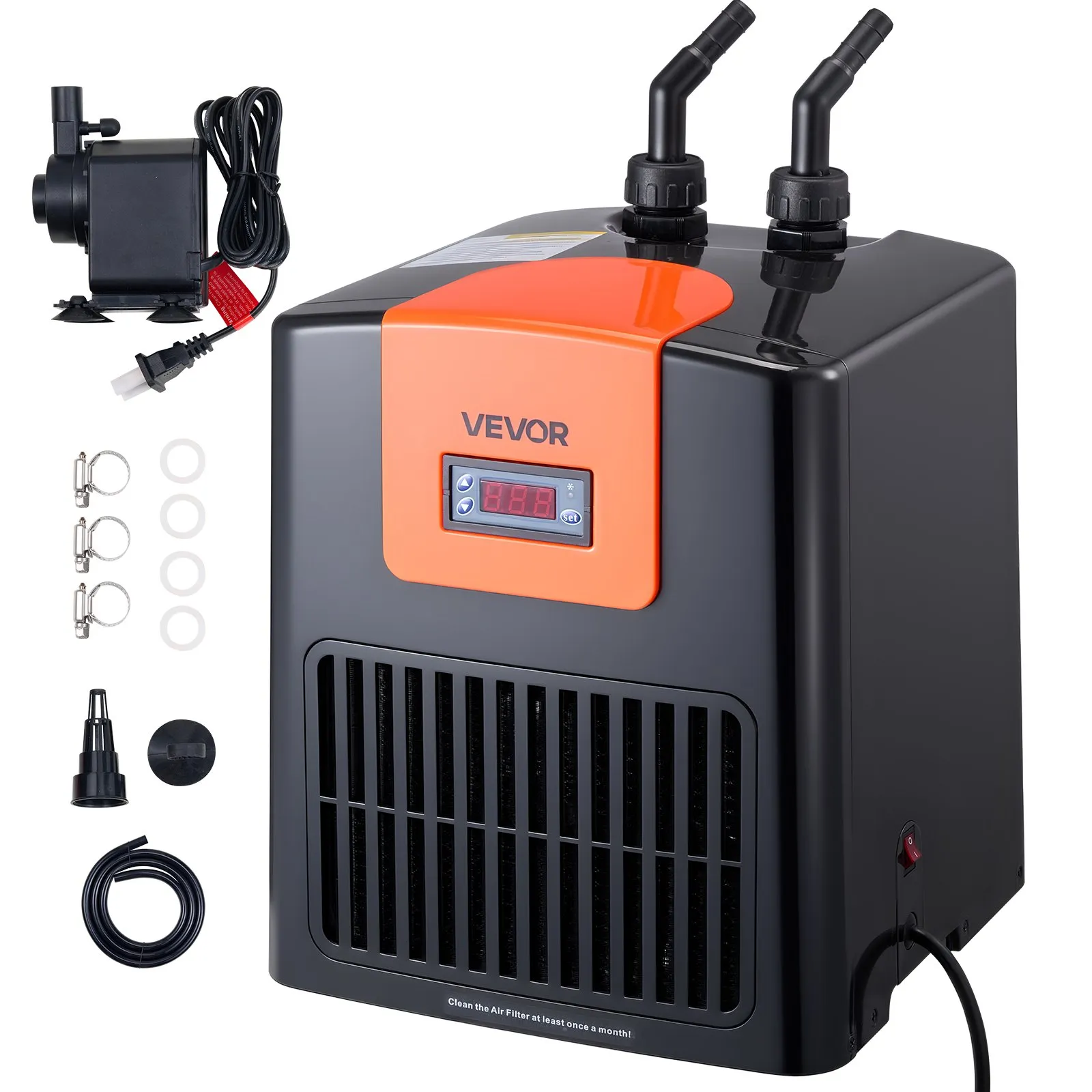
Vevor 52 Gallon, 1/10 HP — $283.90
Handles reservoirs up to 52 gallons in grow rooms up to 80°F. Compact black form factor fits easily in most tent setups. Titanium evaporator resists nutrient solution chemistry. Pump included. Reaches 39°F — well below the 65–68°F DWC optimal range, giving you full headroom.
View on Vevor →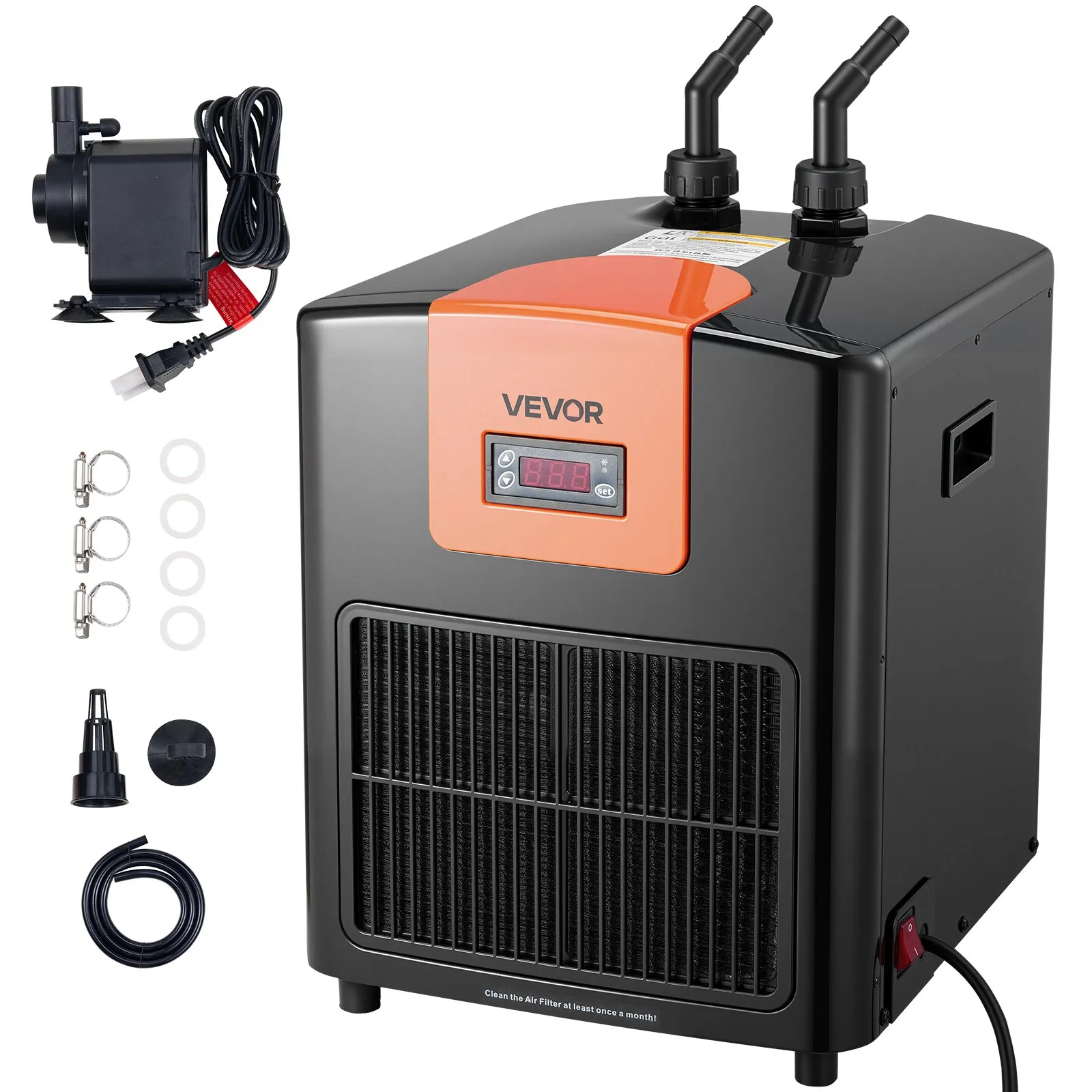
Vevor 110 Gallon, 1/3 HP — $389.90
The right choice for larger hobby systems and small commercial grows with reservoirs up to 110 gallons. Handles warm grow rooms up to 80°F reliably. Faster temperature recovery than the 52-gallon unit — important for systems where lights or pumps add significant heat during the day.
View on Vevor →Alternatives & complementary temperature strategies
A dedicated water chiller is the only reliable solution for maintaining reservoir temperature below ambient. However, several complementary strategies reduce the chiller’s required workload:
| Strategy | Effectiveness | Limitations |
|---|---|---|
| Insulate the reservoir | High — reduces thermal gain 30–50%; reduces chiller run time | Does not lower temperature below ambient; only slows heat gain. Wrap with 2–3 inches of XPS foam board. |
| Use external inline pumps | Moderate — eliminates direct pump heat input to the water | More expensive and requires priming; not always practical for small systems |
| Shade the reservoir | Moderate — prevents direct solar gain; prevents algae | Does not solve ambient heat transfer; opaque reservoir walls are essential regardless |
| Cool the grow room aggressively | High if ambient can stay at 70–75°F | Expensive for large rooms; does not account for submersible pump heat deposited directly into the solution |
| Aggressive air stone aeration | Low — minor evaporative cooling of 1–3°F; supplemental DO | Cannot maintain 6 mg/L DO at reservoir temperatures above 78°F in a typical system; does not solve the core problem |
Monitoring guide
Consistent monitoring is the difference between catching a temperature problem before crop damage and finding out after the roots are already brown. Here is what to track and how often:
| Parameter | Frequency | Target | Action if out of range |
|---|---|---|---|
| Reservoir temperature | Daily; twice daily in summer | 65–72°F (18–22°C) | Adjust chiller set point; check condenser debris; reduce heat sources; increase insulation |
| Dissolved oxygen (DO) | Every 2–3 days; daily in warm weather | >6 mg/L; ideally 8–10 mg/L | Check temperature first; add air stones; clean dirty diffusers; increase circulation |
| Root color | Every 3–5 days | White, firm, branching roots | Brown/slimy: check temperature and DO immediately; treat with beneficial bacteria if Pythium suspected |
| pH | Daily | 5.5–6.5 (crop-specific) | pH drifts faster at higher temperatures; frequent monitoring more important in warm reservoirs |
| EC (electrical conductivity) | Daily | Crop-specific; typically 1.0–3.5 mS/cm | Fluctuating EC can indicate higher evaporation from a warm reservoir |
FAQs
What temperature should hydroponic water be?
65–72°F (18–22°C) is the optimal range for most hydroponic systems. DWC should target the lower end of this range (65–68°F) due to fully submerged roots and no oxygen buffer. Media-based systems can tolerate the upper end. The exact sweet spot widely cited across research is 68°F (20°C).
What happens if hydroponic water is too warm?
Warm water holds less dissolved oxygen, and warm conditions cause roots and microbes to consume oxygen faster. The result: dissolved oxygen crashes, nutrient uptake stops, and Pythium root rot has ideal conditions to attack. Symptoms appear as apparent nutrient deficiencies, wilting, and root browning — by which point the damage is often significant. Temperature prevention is far easier than treatment.
Do I really need a chiller for hydroponics?
In most US indoor grow environments during summer, yes. A grow room with lights and submersible pumps running will push reservoir temperature 10–20°F above ambient. If ambient reaches 75–80°F — common in summer without aggressive air conditioning — the reservoir hits 85–95°F without active cooling. Insulation slows the rise but does not solve it. A chiller is the only reliable solution for consistent temperature management across seasons.
What is Pythium and how do I prevent it?
Pythium is a water mold that thrives in warm, low-oxygen conditions above 72°F. It attacks root systems stressed by high temperature and oxygen starvation, and spreads through recirculating systems rapidly. Prevention is straightforward: keep reservoir temperature below 72°F, maintain dissolved oxygen above 6 mg/L, and inspect roots regularly for early browning. A chiller does most of this automatically.
What size water chiller do I need for DWC?
DWC should always be sized up one tier from what the reservoir volume alone would suggest, because DWC has the lowest oxygen buffer of any hydroponic system. For a 50-gallon DWC reservoir in a warm grow room, use a 1/3 HP unit rather than a 1/10 HP. See our full sizing guide for detailed HP-to-volume matching.
Can I use the Vevor aquarium chiller for hydroponics?
Yes — Vevor’s aquarium-series chillers are widely used for hydroponic applications. The titanium evaporator handles nutrient solution chemistry without corrosion, the temperature range (39–80°F) covers the full hydroponic optimal range with headroom, and the compact form factor fits most tent and indoor grow setups. The 52-gallon 1/10 HP and 110-gallon 1/3 HP models are the most commonly used for hobby to small-commercial hydroponic applications.
Does the chiller replace aeration in hydroponics?
No — the chiller enables aeration to work effectively. Air stones and diffusers oxygenate water efficiently only when the water is cold enough to hold dissolved oxygen. In a warm reservoir, aggressive aeration still cannot maintain the 6 mg/L threshold that root health requires. Temperature management and aeration work together; neither is sufficient alone.
Axolotl keeper? The flow-rate requirements for a hydroponic chiller differ significantly from axolotl use. See our dedicated aquarium chiller for axolotl guide.